
How to Get Wildfire Smoke Smell Out of Your House
Posted July 16, 2026
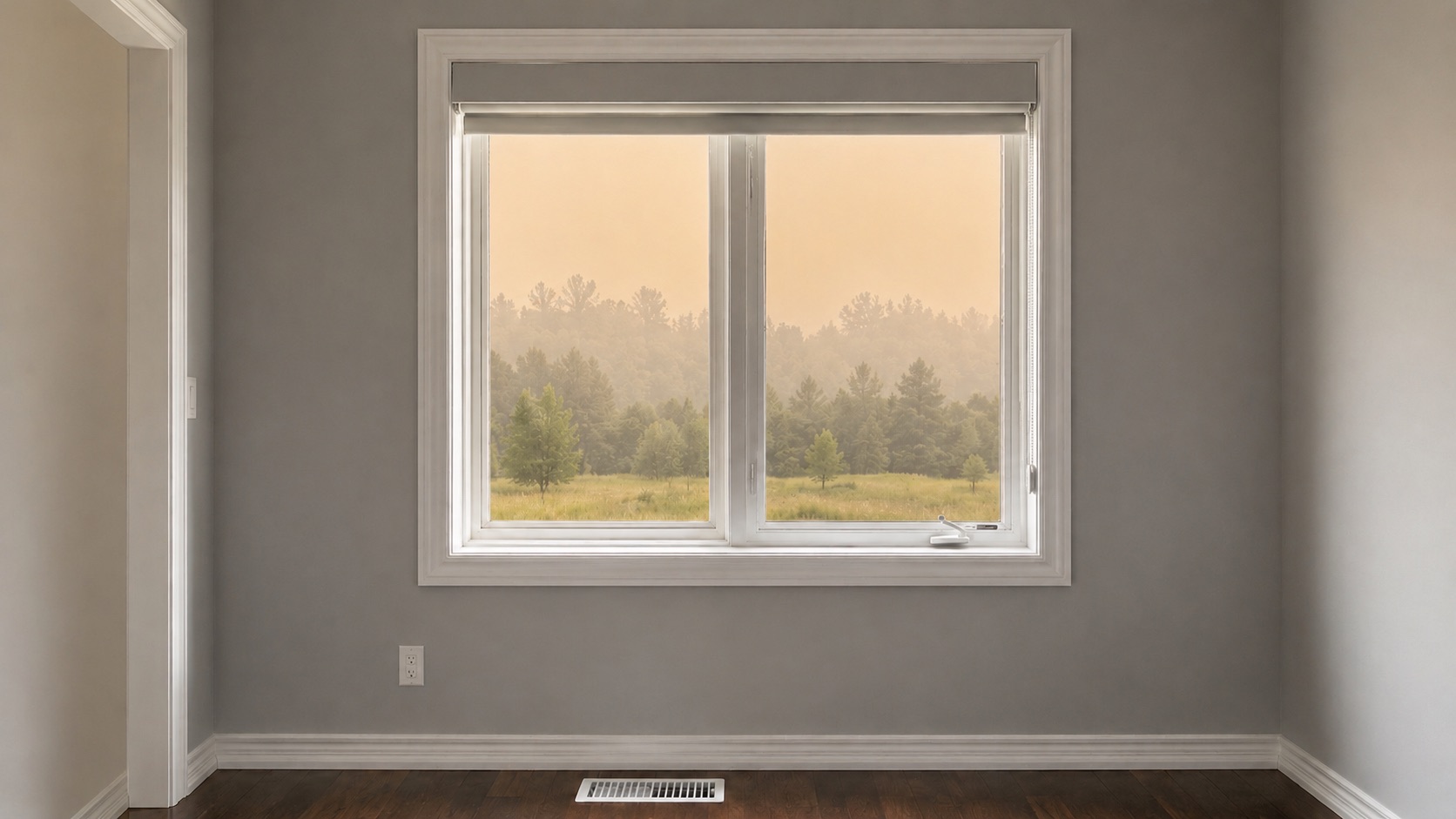
Your home does not need to be close to a wildfire for smoke to get inside.
Wildfire smoke can travel across communities and provinces. It may enter through windows, doors, vents, outdoor air intakes and small gaps in the building.
For most homes affected by distant smoke, this creates a temporary indoor air-quality issue rather than a major restoration loss. The smell may clear once outdoor conditions improve, the home is ventilated and filters are changed.
However, heavier smoke exposure can leave particles and odours on surfaces, carpets, furniture and other contents. Professional smoke remediation may be needed when the odour remains, visible residue is present or the home was directly exposed to a nearby wildfire.
The first step is knowing whether the smoke event is still active. Opening every window can help after the outdoor air improves. During heavy smoke, it may make conditions inside worse.
How do you get wildfire smoke smell out of a house?
For light smoke infiltration with no visible ash or soot, start with these steps:
- Check the Air Quality Health Index and local air-quality alerts.
- Keep doors and windows closed while outdoor air remains smoky.
- Run a suitable portable air cleaner.
- Use the best filter your ventilation system can safely handle.
- Limit activities that add particles to the indoor air.
- Wait for outdoor conditions to improve before ventilating.
- Wet-mop floors and damp-wipe hard surfaces.
- HEPA-vacuum carpets and rugs.
- Clean or replace ventilation and air-cleaner filters.
- Seek professional advice if the smell remains or visible residue is present.
These steps will be enough for many Canadian homes affected by temporary wildfire haze.
If smoke odour remains after the outdoor air clears and the home has been cleaned, an EMRG member can assess whether affected materials or contents require professional treatment. EMRG is available at 1-844-344-3674.
Why does your house smell like smoke when there is no fire nearby?
Wildfire smoke can travel far beyond the area threatened by flames. Changing wind and weather patterns may carry it hundreds or even thousands of kilometres.
Smoke can enter a house through:
- Open windows and exterior doors
- Gaps around older windows and doors
- Outdoor-air intakes
- Mechanical ventilation systems
- Bathroom and kitchen exhaust systems
- Window-mounted air conditioners
- Attached garages
- Openings around pipes and utility services
Health Canada notes that outdoor contaminants can enter through doors, windows, vents, air intakes and other openings in a building.
A smoky smell does not automatically mean that the home has suffered serious property damage. In many cases, small amounts of outdoor smoke have simply entered and remained in the indoor air.
The concern becomes greater when the smell continues after outdoor conditions improve or when smoke has settled onto materials inside the home.
Check the air quality before opening your windows
It may seem logical to open the house as soon as it smells smoky. First, confirm that outdoor air quality has improved.
Check:
- The current Air Quality Health Index, or AQHI
- The forecast AQHI for your community
- InfoSmog forecasts in Quebec
- Special air-quality statements
- Provincial or territorial wildfire information
- Local public-health and emergency instructions
When the outdoor air remains smoky, keep windows and doors closed as much as possible while maintaining a safe indoor temperature.
Once outdoor conditions improve, opening the house can help replace smoky indoor air with cleaner outdoor air. Health Canada recommends ventilating after the smoke event has passed, along with cleaning surfaces and servicing filters.
What if wildfire smoke occurs during extreme heat?
Extreme heat and wildfire smoke often happen at the same time.
Keeping the house closed may reduce smoke exposure, but it can also allow indoor temperatures to rise. During combined heat and smoke events, keeping people cool is the priority.
Use air conditioning when available. If the home becomes too warm, follow local public-health instructions or consider spending time in a community cleaner-air or cooling space.
What to do while wildfire smoke is still outside
During an active smoke event, focus on reducing the amount of outdoor smoke that enters the home.
Keep exterior openings closed
Keep windows and exterior doors closed when it is safe to do so.
Avoid repeatedly opening exterior doors. Make sure windows are fully closed and latched.
Temporary weatherstripping may help reduce air leakage around older doors and windows. However, do not block required ventilation or combustion-air openings.
Improve filtration
Use the highest-quality filter that your furnace or ventilation system can safely accommodate.
Follow the equipment manufacturer’s instructions. A filter that is too restrictive may reduce airflow and affect system performance.
Check the filter more often during prolonged smoke events. A dirty or clogged filter will not work effectively.
Use ventilation settings carefully
Some systems can reduce the amount of outside air they bring into the home. Others operate differently.
Review the equipment instructions or speak with an HVAC professional before changing system settings.
Avoid running whole-house fans or other equipment that intentionally pulls smoky outdoor air into the building.
Limit unnecessary exhaust-fan use
Bathroom and kitchen exhaust fans push air outdoors. Replacement air must then enter the house, which can draw smoke through gaps and openings.
Use exhaust fans when needed for cooking or moisture control. Otherwise, limit unnecessary use during heavy outdoor smoke.
Reduce indoor sources of pollution
Avoid adding more particles or gases to the indoor air.
Limit:
- Smoking or vaping indoors
- Candles and incense
- Wood-burning fireplaces
- Heavy frying or broiling
- Aerosol sprays
- Dry sweeping
- Vacuuming without effective filtration
These activities do not create wildfire smoke, but they can make indoor air quality worse.
Can an air purifier remove wildfire smoke?
A portable air cleaner can reduce airborne fine particles in the room where it operates.
It works best when:
- The unit is properly sized for the room
- Doors and windows remain closed
- The air intake and outlet are not blocked
- The filter is clean
- The unit runs for extended periods
Look for a model with a published clean air delivery rate, known as CADR. For wildfire smoke, the smoke CADR is the most relevant measurement.
Health Canada recommends choosing an air cleaner based on room size and smoke CADR. As a general guideline, the smoke CADR should be at least two-thirds of the room’s area in square feet. A 150-square-foot room would therefore require a smoke CADR of at least 100.
Will a HEPA filter remove the smoke smell?
A HEPA filter captures fine airborne particles. However, smoke odour may also involve gases and residue on materials.
Some air cleaners include activated carbon or other adsorbent filters intended to reduce gases and odours. Their effectiveness varies based on the amount of filter material, airflow and level of exposure.
An air cleaner cannot remove residue that has already settled onto furniture, floors, carpets or other contents. It is one part of the response, not a complete cleaning method.
Avoid devices that intentionally produce ozone. Ozone can be harmful and should not be used as a casual household solution.
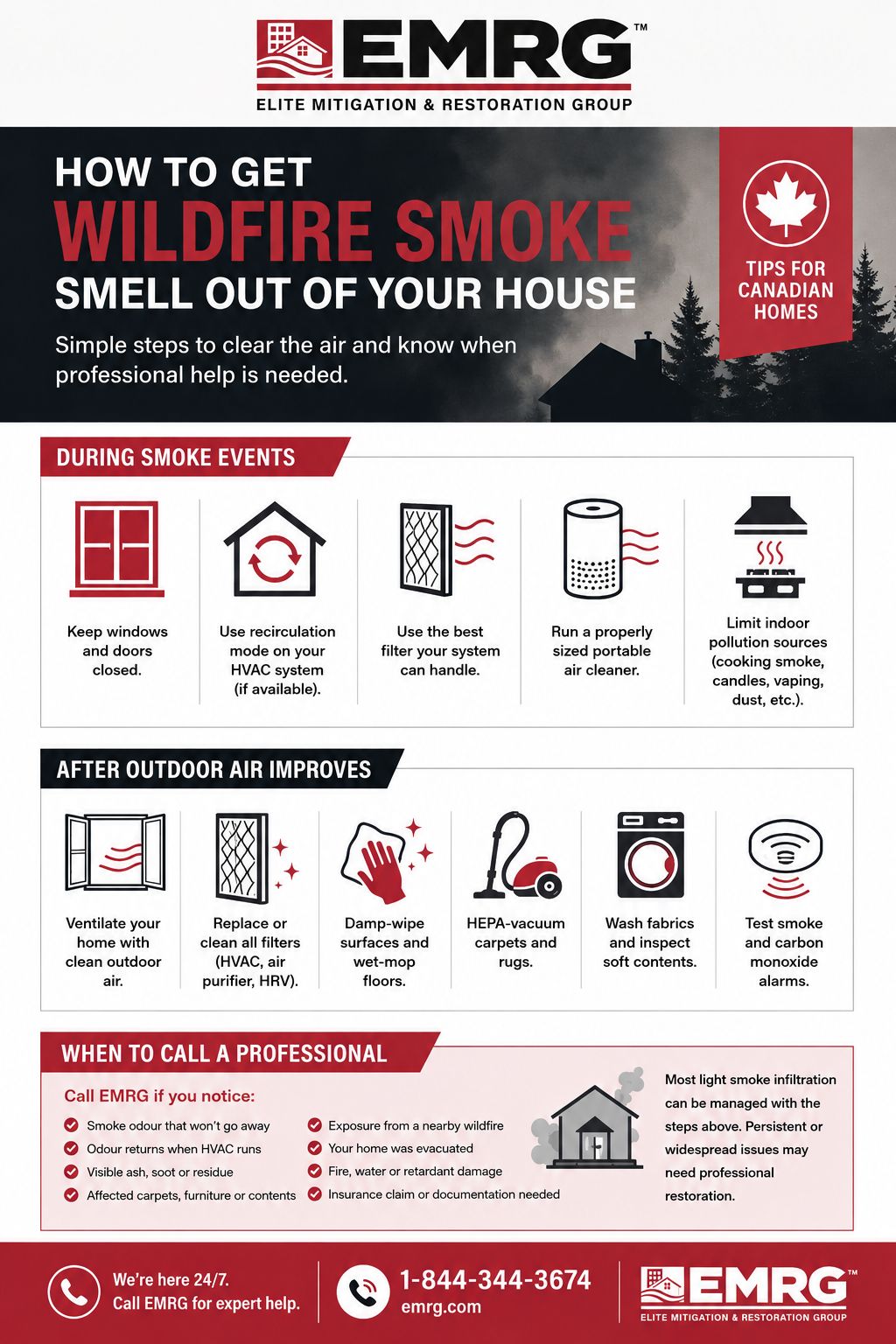
How to clean your home once outdoor smoke clears
When the AQHI and local advisories show that outdoor conditions have improved, begin airing out and cleaning the home.
These steps are appropriate for light or moderate smoke infiltration without widespread visible soot or ash.
- Ventilate the home
Open windows and doors when outdoor air is cleaner.
Create gentle airflow through affected rooms. Avoid bringing in outdoor air if smoke or blowing ash is still present nearby.
- Inspect and replace filters
Check filters that operated during the smoke event, including:
- Furnace and central HVAC filters
- Portable air-cleaner filters
- Heat-recovery ventilator filters
- Energy-recovery ventilator filters
- Window air-conditioner filters
- Range-hood filters
Filters may need replacement sooner than usual after an extended smoke event.
- Damp-wipe hard surfaces
Fine particles can settle onto tables, shelves, counters and window ledges.
Use a damp microfibre cloth or a suitable mild cleaning solution. Rinse or replace cleaning cloths regularly.
Pay attention to:
- Window frames
- Areas near exterior doors
- Air registers
- Tops of cabinets
- Shelves
- Electronics
- Rooms that are not cleaned frequently
Avoid aggressive dry dusting because it can lift settled particles back into the air.
- Wet-mop hard floors
Wet-mopping helps collect settled particles instead of spreading them.
Change the water as it becomes dirty. Work through the home in a planned order so residue is not tracked back into cleaned areas.
- HEPA-vacuum carpets and rugs
Use a vacuum equipped with a HEPA filter.
Vacuum slowly and make more than one pass where needed. Follow the manufacturer’s directions for emptying the canister or replacing the bag.
An ordinary vacuum without effective filtration may release smaller particles back into the room.
- Wash affected fabrics
Wash fabrics that have a noticeable smoke smell, such as:
- Bedding
- Clothing
- Removable furniture covers
- Washable curtains
- Throw blankets
Follow each item’s care instructions. Avoid using heavy fragrances to cover the smell.
Area rugs, delicate textiles and heavily affected fabrics may require professional cleaning.
- Inspect upholstered furniture
A mild surface odour may improve with ventilation and cleaning. Smoke that has entered foam, cushions or padding can be more difficult to remove.
Do not soak furniture with household deodorizing products. Excess moisture inside cushions can create additional problems.
Canadian post-wildfire guidance recognizes that upholstered furniture may be difficult to restore when smoke odour has penetrated the material.
- Check closets and storage areas
Less-ventilated spaces may hold odours longer than the main rooms.
Inspect:
- Closets
- Linen cupboards
- Basements
- Storage rooms
- Cardboard boxes
- Books and paper items
- Fabric toys
- Seasonal clothing
Do not assume that every stored item needs cleaning. Focus on materials with a noticeable smell or visible residue.
What if there is visible ash or soot inside?
Visible ash or soot is different from a temporary smoky smell.
Do not dry-sweep it or use an ordinary household vacuum. These methods can make fine material airborne and spread it through the home.
Instead:
- Keep people and pets away from affected areas
- Photograph the conditions before cleaning
- Avoid disturbing heavy deposits
- Contact the insurer if a claim may be involved
- Arrange professional advice for widespread contamination
Direct wildfire exposure may involve more than smoke. Ash, soot, fire retardant, damaged contents and firefighting water may all be present.
That type of loss should not be treated as ordinary household cleaning. An EMRG member can assess the affected areas and develop an appropriate restoration plan.
Why does the smoke smell keep returning?
A smell that returns after cleaning may indicate that the source has not been fully addressed.
Possible causes include:
- Outdoor smoke is still entering
- A dirty ventilation filter remains in place
- The HVAC system is distributing the odour
- Residue remains on surfaces
- Carpets or upholstery retain the smell
- Stored contents were overlooked
- An attic, basement or attached garage remains affected
- The property had heavier exposure than first believed
Note when the smell appears.
For example:
- Does it begin when the furnace fan turns on?
- Is it limited to one room?
- Is it strongest near a window or air register?
- Does it become more noticeable during warm or humid conditions?
These details can help locate the source.
Does the ductwork need to be cleaned?
Not every home exposed to wildfire smoke needs duct cleaning.
Start by checking and replacing the ventilation filter. Then monitor whether the smell becomes stronger when the system operates.
Professional HVAC assessment may be appropriate when:
- Visible residue is present near registers
- The property had direct ash or soot exposure
- Smoke odour begins when the system turns on
- The mechanical system operated during heavy contamination
- The home was directly affected by wildfire
- There are concerns about equipment safety
For properties directly affected by wildfire, Canadian guidance recommends obtaining professional advice before cleaning, restoring or restarting HVAC equipment.
Do not spray fragrances or household chemicals into air ducts.
What not to do
Avoid methods that spread residue or hide the smell without addressing its source.
Do not:
- Open windows during heavy outdoor smoke
- Dry-sweep ash
- Use an unfiltered vacuum on soot or ash
- Mix household cleaning products
- Burn candles or incense to mask the odour
- Rely on scented sprays
- Use ozone-producing equipment in an occupied home
- Paint over smoke residue before cleaning
- Throw out valuable contents before documenting them
A smoky odour does not always mean extensive damage. However, masking a persistent smell is not the same as removing its source.
When is professional smoke remediation actually needed?
Most Canadian homes affected by distant wildfire haze will not require full professional remediation.
Basic filtration, ventilation and household cleaning are often enough when:
- Smoke exposure was temporary
- There is no visible ash or soot
- The odour improves after outdoor conditions clear
- Carpets and contents do not continue to smell
- The HVAC system is not redistributing the odour
Professional help becomes more appropriate when:
- The smell remains after ventilation and cleaning
- Several rooms or levels are affected
- The odour returns when the HVAC system runs
- Carpets, furniture or stored contents continue to smell
- Visible ash, soot or residue is present
- The property was close to an active wildfire
- The building experienced direct smoke or fire exposure
- Insurance documentation is required
- The source cannot be identified
An assessment does not mean the entire home must be remediated. A restoration professional should first determine what is affected and which materials can be cleaned.
What professional smoke and odour removal may involve
The process depends on the severity and type of exposure.
It may include:
Property assessment
The contractor inspects affected rooms, surfaces, contents and possible smoke-entry pathways.
Residue evaluation
Temporary outdoor smoke infiltration is treated differently from direct ash, soot or fire exposure.
Air filtration
Professional filtration equipment may be used to reduce airborne particles during cleaning.
Detailed cleaning
Affected floors, walls, ceilings, trim, fixtures and other surfaces may require material-specific cleaning.
Carpet and upholstery treatment
The contractor assesses whether carpets, underlay, furniture and other porous materials can be restored.
Contents restoration
Affected belongings may be inventoried, cleaned, deodorized or removed for specialized treatment.
HVAC coordination
Filters, registers and mechanical components may be inspected when the system appears to be spreading odour.
Odour treatment
Professional odour control should address affected materials rather than simply adding fragrance.
Get professional help when wildfire smoke goes beyond a temporary smell
Wildfire smoke affecting the outdoor air does not automatically create a restoration emergency inside every home.
However, persistent odour, visible residue and affected contents should not be ignored. These signs may indicate that smoke has moved beyond the indoor air and settled into parts of the property.
EMRG connects property owners with vetted, independent restoration contractors across Canada.
EMRG members can help with:
- Smoke and odour assessment
- Surface and structural cleaning
- Carpet and upholstery restoration
- Contents cleaning and management
- HVAC coordination when required
- Fire and smoke damage restoration
- Documentation for insurance claims
- Reconstruction following direct fire damage
The goal is not to recommend more work than the property needs. It is to identify what has actually been affected and develop a restoration plan that fits the conditions.
Still smelling wildfire smoke after the outdoor air has cleared?
Call EMRG at 1-844-344-3674.
EMRG is available 24 hours a day, seven days a week to connect you with an experienced member serving your area.
Frequently asked questions
Does every wildfire smoke event require professional cleaning?
No. Many homes experience only temporary smoke infiltration. Filtration, ventilation, filter replacement and routine cleaning may be enough.
Professional cleaning is more likely to be needed when odour persists, visible residue is present or porous materials and contents remain affected.
Can smoke enter a basement with no open windows?
Yes. Smoke can enter elsewhere and move through stairwells, gaps or ventilation systems. It may also enter through utility openings or an attached garage.
A basement smell may come from stored contents or the HVAC system rather than a basement window.
Can you become used to the smoke smell?
Yes. After spending time in an affected home, you may notice the odour less.
Leave for a period and check again when you return. Someone who has not been inside may also notice an odour that occupants no longer detect.
Should everything in a smoky room be washed?
No. Focus on items that have a noticeable smell or visible residue.
Wash suitable fabrics according to their care labels. Delicate or valuable items may require specialized cleaning.
Can central air conditioning run during wildfire smoke?
It may help cool the home and filter recirculated air, depending on the system.
Keep the filter clean and follow the manufacturer’s instructions. Speak with an HVAC professional if you do not know whether the system brings in outside air.
Can wildfire smoke smell return weeks later?
Yes. Odours held in porous materials may become more noticeable when indoor temperature or humidity changes.
The HVAC system may also redistribute odour when seasonal heating or cooling begins.
Is professional odour removal just a stronger deodorizer?
No. Proper odour removal starts by locating and cleaning the affected materials.
Deodorization may be part of the process, but it should not replace residue removal, filtration, contents cleaning or necessary repairs.
Related Blog: