
7 Home Insurance Claim Mistakes to Avoid After Property Damage in Canada
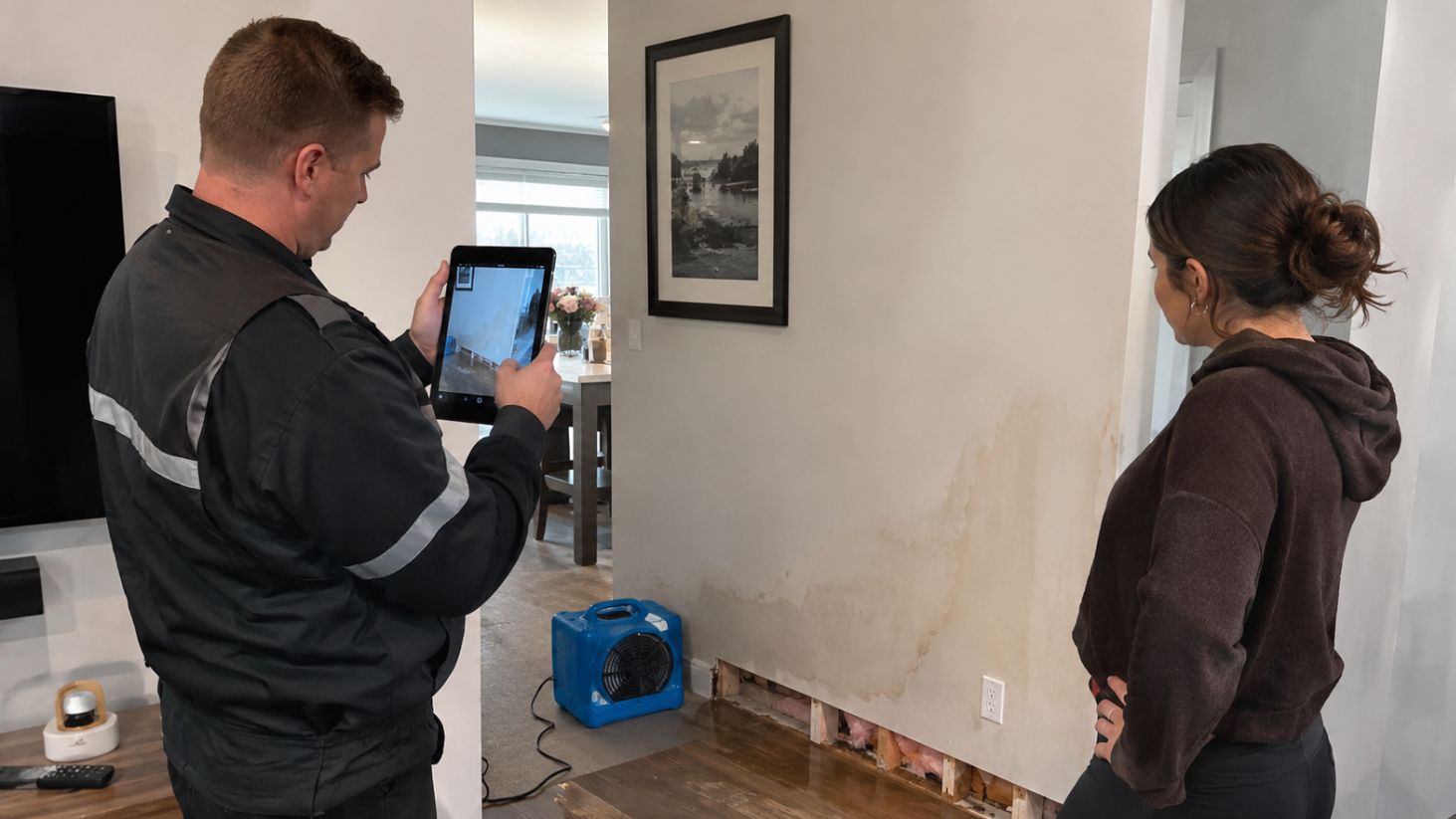
After water, fire, storm or other sudden property damage, homeowners often have several things demanding attention at once.
There may be water to remove, damaged belongings to protect, a roof opening to secure or smoke contamination to assess. At the same time, there is an insurance company to contact, photos to take and decisions to make about cleanup and repairs.
That is where mistakes can happen.
Most homeowners rarely deal with a major property insurance claim. It is understandable not to know exactly what should happen first. The important distinction is between what needs to happen immediately to protect the property and the permanent repairs that come later.
Below are seven home insurance claim mistakes to avoid after property damage in Canada, along with what to do instead.
Important: Insurance policies, claim requirements and coverage vary. Your insurer determines whether a loss is covered. A restoration contractor can help protect, document and restore the property, but does not approve or deny an insurance claim.
Property Damage That Needs Immediate Attention?
EMRG can connect you with an experienced local restoration professional who can help stabilize the property, document affected areas, mitigate the damage and move the restoration forward.
What Is the Biggest Mistake People Make With a Home Insurance Claim?
There is no single mistake that applies to every claim, but two problems can create unnecessary complications: waiting too long to act and failing to properly document the loss.
After property damage, homeowners generally have two immediate priorities:
- Notify their insurer or broker promptly.
- Take reasonable steps to prevent additional damage when it is safe to do so.
Those two things can happen at the same time.
If water is actively entering the property, for example, you should not simply allow it to continue damaging the building because an adjuster has not yet arrived. The goal is to protect the property while keeping a clear record of what happened and what emergency work was required.
7 Home Insurance Claim Mistakes to Avoid After Property Damage
Waiting Too Long to Notify Your Insurance Company
Once everyone is safe, contact your insurance company, broker or agent as soon as reasonably possible.
Insurance policies contain claim procedures and timelines, and those requirements are not identical across every insurer or policy.
When reporting the loss, provide the information you actually know:
- What happened
- When you discovered the damage
- Which areas appear affected
- Whether the damage is still active
- What emergency steps have already been taken
You do not need to diagnose the entire loss yourself. If you discover water on a basement floor, for example, report what you found rather than guessing that the foundation, sewer or plumbing system definitely failed.
For water-specific guidance, see EMRG's guide on how to make a successful water damage insurance claim in Canada.
Waiting for the Insurance Process While the Property Gets Worse
Reporting the claim does not mean every emergency action has to wait until an adjuster physically sees the property.
Depending on the loss, reasonable emergency mitigation can include:
- Shutting off a water source
- Extracting standing water
- Beginning appropriate structural drying
- Temporarily tarping a damaged roof
- Boarding up an opening
- Containing affected areas
- Protecting unaffected belongings
- Addressing immediate safety hazards
The important distinction is between emergency mitigation and permanent repairs.
Emergency mitigation helps prevent a loss from getting worse. Permanent repairs restore the building afterward.
If a burst pipe has filled a basement with water, for example, extraction and drying may need to begin quickly. Installing new flooring or permanently rebuilding the room is a different stage.
Learn more about this process in EMRG's guide to emergency restoration services for insurance claims in Canada.
Throwing Away Damaged Property Before Documenting It
After a fire, flood or other loss, the natural reaction may be to start removing damaged belongings and materials immediately.
Before disposing of damaged property, when it is safe and practical to do so:
- Take clear photographs
- Record video
- Create an inventory
- Record make, model or serial numbers where available
- Keep receipts or other proof of ownership when possible
There is an important safety exception.
You should not keep sewage-contaminated materials, unstable fire debris or other hazardous items in your home simply to preserve evidence. Wet or damaged materials may also need prompt professional removal to protect the property.
When something must be removed for safety or mitigation, document it as thoroughly as reasonably possible beforehand.
Starting Permanent Repairs Before the Loss Is Properly Documented
There is a difference between preventing further damage and rebuilding the property.
Emergency work may need to happen immediately. Permanent repairs generally should not begin until the damage has been documented and the insurer has had the opportunity to understand the loss and required scope.
The goal is to stabilize the property without erasing evidence of the original damage before it has been properly documented.
Keeping Poor Records of the Damage and Claim Expenses
Photos are only one part of good claim documentation.
A more complete record may include:
- Photos and video of affected areas
- Dates and times
- A contents inventory
- Purchase receipts or other proof of ownership
- Emergency cleanup and restoration invoices
- Temporary accommodation receipts
- Other claim-related expenses
- Copies of important communication with the insurer, adjuster and contractors
Some claims may also require a formal Proof of Loss or other documentation.
Do not assume there is one universal Canadian deadline for every home insurance claim. Requirements can depend on the policy, insurer and applicable provincial rules. Ask your insurer what documents are required and when they must be submitted.
Guessing, Exaggerating or Providing Incomplete Information
Property damage can be confusing, especially before the source has been professionally investigated.
That makes it important to separate facts from assumptions.
Instead of saying, "The foundation failed overnight," when the source is unknown, a more accurate description would be: "We discovered water on the basement floor at approximately 7:00 a.m. The source has not yet been confirmed."
Report what you know. If additional information becomes available later, update the insurer.
The same principle applies to belongings and costs. Do not inflate values, include items that were not actually damaged or guess at facts you do not know.
Assuming That Because Something Was Damaged, Insurance Automatically Covers It
Visible damage alone does not determine whether an insurance claim is covered.
The cause of the loss, policy wording, exclusions and optional coverages can all matter.
For example:
- Burst pipe: resulting water damage may be treated differently from the failed component itself.
- Roof leak: resulting interior damage may be treated differently from replacing an old or deteriorated roof.
- Sewer backup: coverage may depend on whether appropriate protection is included in the policy.
- Overland water: coverage varies by insurer, property and policy.
- Mould or gradual damage: long-term moisture or maintenance-related damage may be treated differently from a sudden insured event.
Never assume something is covered or excluded based only on what the damage looks like. Your insurer or broker should confirm how your specific policy applies.
For another example of how the source of water can affect an insurance claim, read Does Home Insurance Cover Basement Flooding in Canada?
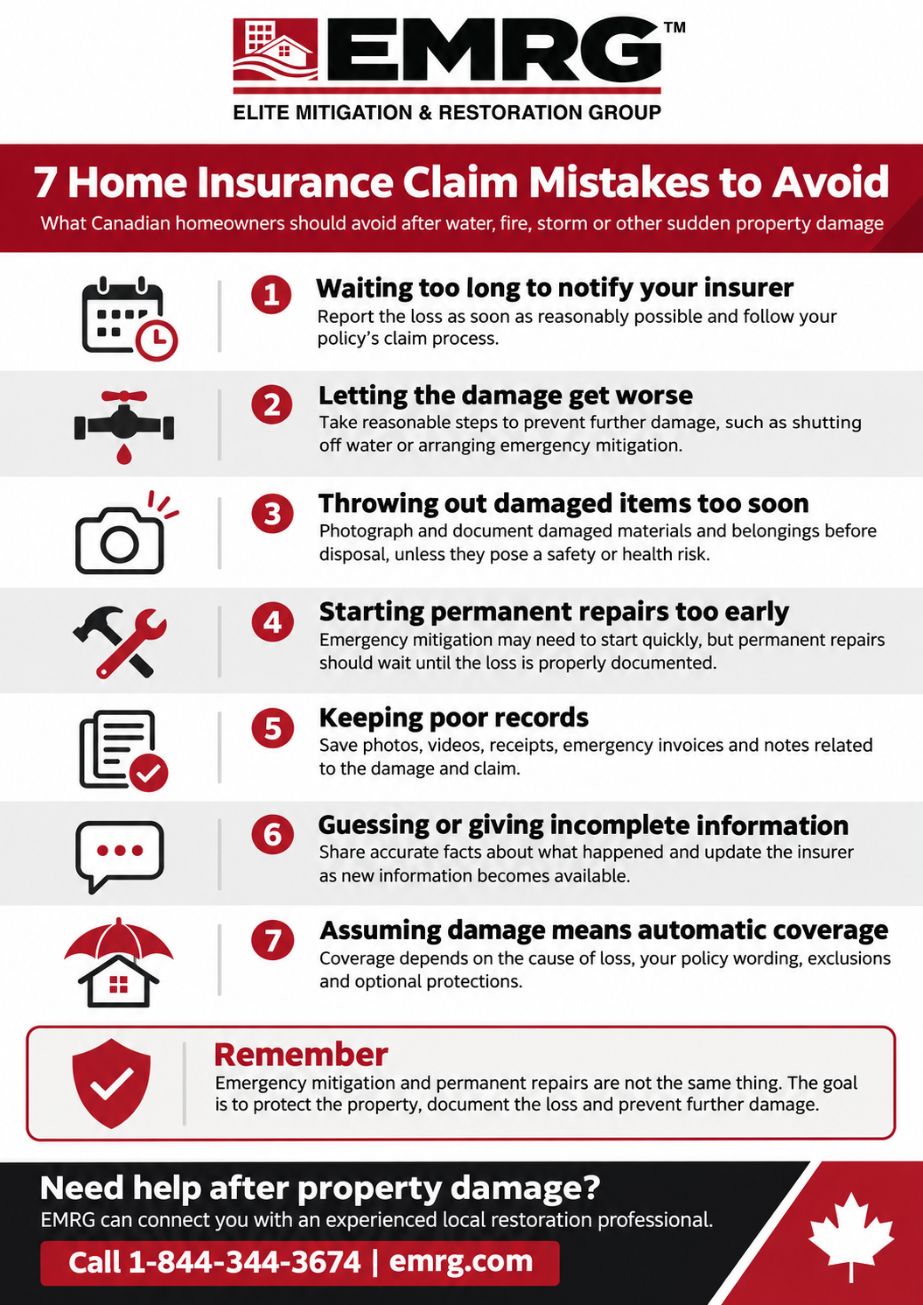
7 Insurance Claim Mistakes at a Glance
Save or share this quick reference for the key mistakes homeowners should avoid after property damage.
What Are Common Reasons Home Insurance Claims Are Denied?
A denied claim does not necessarily mean the homeowner made a mistake.
A claim may be denied or limited because:
- The cause of loss is not covered by the policy
- A specific exclusion applies
- Required optional coverage was not purchased
- The damage is considered gradual or maintenance-related
- Policy conditions were not satisfied
- Required documentation is unavailable
- Claim procedures or deadlines were not followed
- Material information provided to the insurer is inaccurate
The restoration contractor documents and restores the property. The insurer determines whether the loss is covered.
If you disagree with a coverage decision, ask the insurer to explain the reason and identify the policy wording that applies. Canadian consumers also have complaint and dispute-resolution options when a disagreement cannot be resolved directly.
What Should You Do Immediately After Property Damage?
The exact response depends on the type and severity of the loss, but a practical sequence is:
Make Sure Everyone Is Safe
Do not enter areas with electrical, fire, structural or contamination hazards.
Stop Further Damage When It Is Safe
Shut off a water source, protect unaffected belongings or take temporary protective measures where appropriate.
Document the Loss
Take photographs and video before major cleanup whenever it is safe and practical.
Contact Your Insurance Company or Broker
Report what happened and ask what steps or documentation your policy requires.
Keep Damaged Property and Receipts
Preserve damaged items unless they are unsafe or need to be removed to prevent further damage. Keep receipts for emergency and claim-related expenses.
Get Professional Restoration Help When Needed
If the damage is active, widespread or beyond what can be safely managed, professional mitigation may need to begin quickly.
Emergency Mitigation and Permanent Repairs Are Not the Same Thing
This distinction causes a lot of confusion during insurance claims.
Emergency Mitigation
Purpose: protect the property and limit further damage.
- Water extraction
- Structural drying
- Board-up
- Temporary tarping
- Containment
- Emergency cleaning
- Temporary protection
Permanent Restoration
Purpose: repair and restore the building after conditions are stable and the required scope is understood.
- Drywall replacement
- Flooring
- Cabinetry
- Painting
- Finish carpentry
- Structural repairs
- Reconstruction
"Do not start permanent repairs yet" should not be interpreted as "do nothing while the property continues to deteriorate."
Those are very different things.
How Does a Restoration Contractor Support an Insurance-Related Property Loss?
A qualified restoration contractor does not determine coverage or guarantee that an insurer will pay for specific work.
What the contractor can do is help establish the condition of the property, prevent further damage and document the work required to restore it.
Depending on the loss, restoration support may include:
Insurance Restoration Across Canada
EMRG is a national network of vetted, independent property restoration contractors serving communities across Canada.
Premium Restoration
Eclipse Restoration, PURE Restoration
Restorex Disaster Restoration
Paul's Restorations, Alpine Construction, Complete Restoration Services, Woodhouse Restorations, Leda Restoration & General Contracting, Findlay Restoration
Gestion Artek, Groupe Liracon
SystemCare Cleaning & Restoration
When property damage requires emergency mitigation and restoration, EMRG can be your one call to get the process moving.
We'll connect you with an experienced local restoration member who can help stabilize the property, document affected areas, mitigate the damage and carry the restoration through the necessary repairs.
Frequently Asked Questions About Home Insurance Claim Mistakes
What Is the Biggest Mistake People Make With a Home Insurance Claim?
There is no single mistake that applies to every claim. However, waiting too long to report or respond to active damage and failing to properly document the loss can create unnecessary complications. Contact your insurer promptly, document the damage and take reasonable steps to protect the property from further loss.
What Are Common Reasons Home Insurance Claims Are Denied?
A home insurance claim may be denied or limited because the cause of loss is not covered, an exclusion applies, required optional coverage was not purchased, policy conditions were not met, the damage is gradual or maintenance-related, documentation is insufficient or material information is inaccurate. The insurer determines coverage based on the specific policy and circumstances.
Should I Clean Up Before the Insurance Adjuster Arrives?
You should take reasonable emergency steps to prevent additional damage when it is safe to do so. Document conditions before cleanup where practical and avoid unnecessary permanent repairs until the loss has been discussed with your insurer.
Can I Throw Away Damaged Items Before My Insurance Claim Is Settled?
Damaged property should generally be documented and retained until your insurer advises otherwise. However, dangerous, contaminated or health-hazardous materials may need to be removed. Photograph and document those items before disposal whenever it is safe and practical.
Can Emergency Restoration Start Before the Insurance Adjuster Visits?
Emergency mitigation may need to begin before an adjuster visits if waiting would allow additional property damage to occur. Notify your insurer promptly, document the conditions and keep records of emergency work and expenses.
Who Decides Whether My Property Damage Is Covered?
Your insurance company determines coverage based on the policy wording and circumstances of the loss. A restoration contractor can document, mitigate and restore the property but does not approve or deny an insurance claim.
What Is the Difference Between Mitigation and Restoration?
Mitigation is the immediate work used to limit further damage, such as water extraction, structural drying, board-up or temporary protection. Restoration and reconstruction happen afterward to repair and return the property to its appropriate pre-loss condition.
Property Damage Doesn't Wait for the Claim Process
Insurance claims can take time to investigate, document and settle. Active water, smoke, contamination and exposed building materials can continue affecting a property during that process.
The right response is not to rush through the claim or the restoration. It is to protect the property, document what happened, communicate with the insurer and get qualified help when immediate mitigation is needed.
If your home has suffered water, fire, storm or other sudden property damage, EMRG can connect you with an experienced restoration professional serving your area.