
Water Damage From the Unit Above: What to Do and Who Is Responsible?
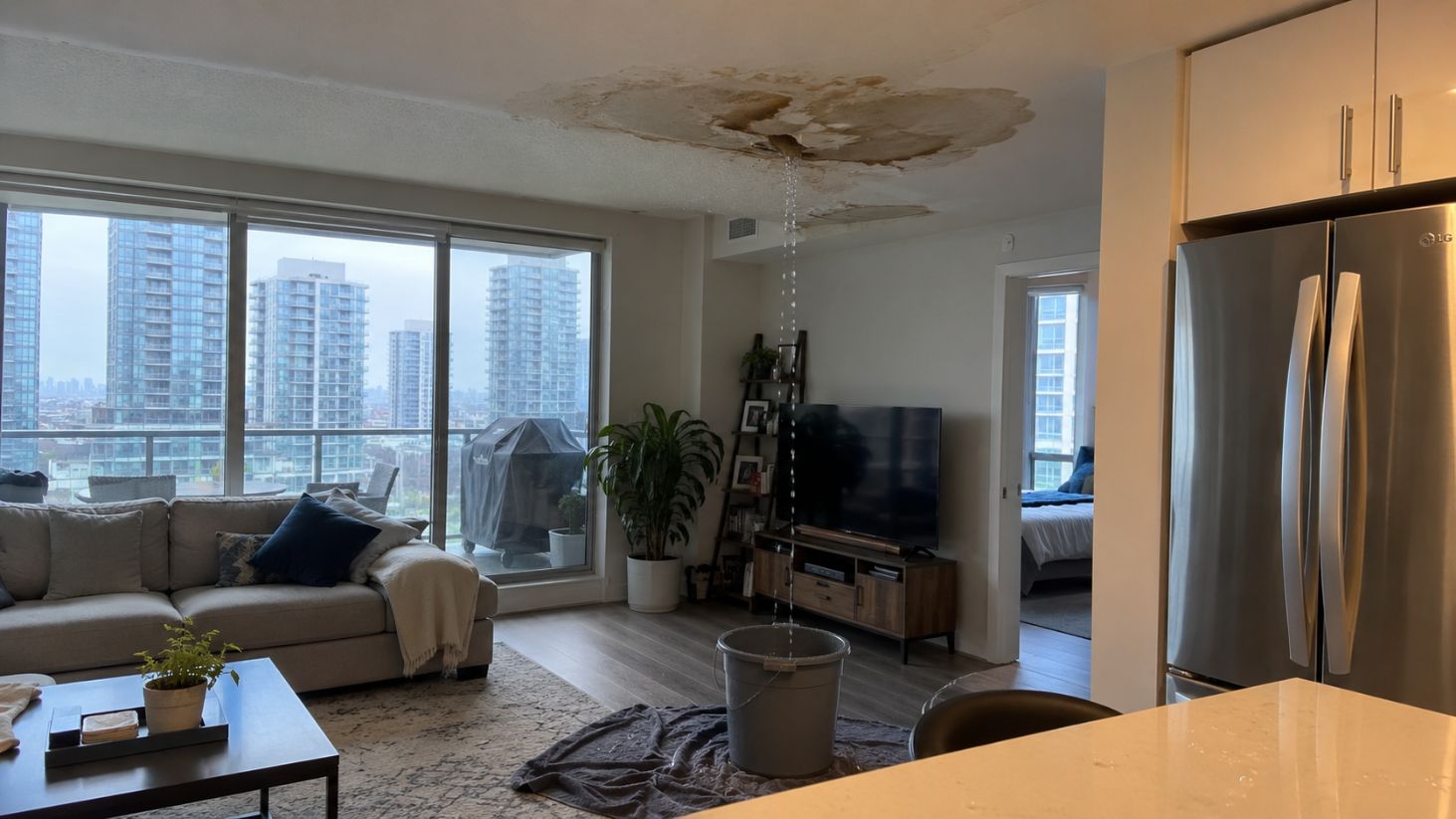
Water coming through your ceiling or walls from the unit above creates two immediate questions: how do you stop the damage, and who is responsible for it?
In a condo, strata, apartment or other multi-unit property, the answer is not always as simple as blaming the person upstairs. The water may have started inside another unit, but the failed component could be part of a shared building system. Insurance, repair responsibilities and deductibles can also involve several different parties.
What should not wait is the response to the water itself.
If water is actively moving between units, the source needs to be identified and controlled as quickly as possible. Affected areas also need to be assessed for hidden moisture and properly dried.
Need help now? EMRG can connect property owners, residents and property managers with an experienced local restoration member who can help get the source under control, mitigate the water damage and restore the affected property.
What Should You Do If Water Is Coming From the Unit Above?
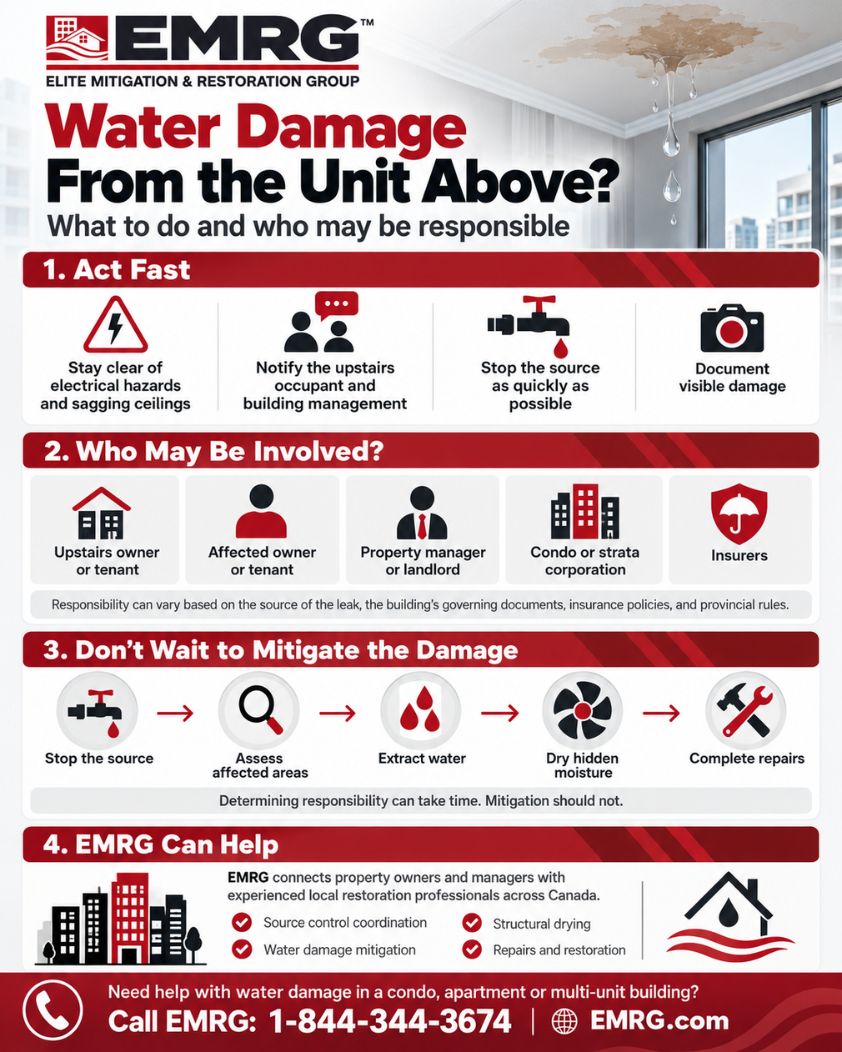
When water starts appearing through a ceiling, wall or light fixture, focus first on safety and limiting further damage.
Stay Clear of Electrical and Ceiling Hazards
Do not touch wet light fixtures, switches or electrical equipment. If a ceiling is sagging, bulging or heavily saturated, keep people away from the area.
Do not cut into or puncture a damaged ceiling yourself. If there is an immediate electrical, structural or life-safety concern, stay clear and contact the appropriate emergency professional.
Notify the Upstairs Occupant and Building Management
If you know which unit is above the affected area, notify the occupant if it is safe and practical to do so.
The property manager, landlord, condo corporation or strata representative should also be contacted promptly. Access to another unit or shared building system may be needed to locate and stop the source.
Stop the Source as Quickly as Possible
Common causes include overflowing fixtures, leaking showers, appliance connections, failed supply lines, burst pipes, hot water tanks, HVAC problems and shared plumbing systems.
If the source can be safely shut off, doing so may help limit further damage.
Document the Damage
Take photos and video of active water, wet ceilings and walls, flooring, damaged belongings and any suspected source when it is safe to do so.
Record when the water was first noticed and who was notified.
Good documentation can help building management, restoration professionals and insurers understand the loss. For more information, read EMRG's guide on how to make a successful water damage insurance claim in Canada.
Begin Water Damage Mitigation
Stopping the leak does not mean the building is dry. Water can remain inside ceilings, insulation, flooring and wall cavities long after the visible dripping stops.
If significant water has entered the property, professional assessment and drying may be needed. Learn more about emergency water extraction and structural drying.
Why Water From an Upstairs Unit Can Affect More Than One Area
Water does not necessarily travel straight down. It can move along floor assemblies, framing, plumbing penetrations and other building components before becoming visible.
A leak in one unit may potentially affect:
- The unit where the water originated
- The unit directly below
- Adjacent units
- Hallways and common areas
- Wall and ceiling cavities
- Flooring and subflooring
- Insulation
- Electrical or mechanical areas
This is one reason water damage in condos and apartments can become complicated quickly. The room where the water becomes visible may not be the only area that needs to be inspected.
Restoration professionals can use moisture meters and other assessment methods to help determine how far the water has travelled.
If the damage is appearing specifically through a ceiling, EMRG's guide on what to do when water is leaking from your ceiling provides additional safety and response information.
Who Is Responsible for Water Damage From the Unit Above in Canada?
There is no single Canada-wide answer.
Responsibility can depend on several factors, including:
- The province or territory
- Whether the building is a condo, strata or rental property
- Where the water originated
- What failed
- Whether the affected area is part of an individual unit or common property
- The condo or strata corporation's governing documents
- Insurance policy wording
- Whether negligence or another form of legal responsibility was involved
Important: The fact that water came from the unit above does not automatically mean the person living there is responsible for every part of the damage.
Condo, strata and tenancy laws differ across Canada. Building documents and insurance policies can also affect how a particular loss is handled. This article provides general restoration information, not legal or insurance advice.
If You Own a Condo or Strata Unit
A loss may involve the condo or strata corporation, the owner where the loss originated, the affected owner and one or more insurance policies.
Common property, unit components, upgrades, belongings and insurance deductibles may be treated differently.
If You Rent
Report water damage to the landlord or property manager promptly. Provincial tenancy laws vary, so responsibility should not be assumed simply because the water came from another unit.
If You Manage the Property
Focus first on access, source control and documenting all affected areas. Responsibility and insurance questions can then be addressed with the appropriate owners, tenants and insurers.
For a broader look at rental flooding, read What to Do When Your Rental Property Floods in Canada.
Who Pays for Water Damage in a Condo or Apartment?
This is where many multi-unit losses become confusing because several different questions may need to be answered:
- Who is responsible for fixing the source?
- Who is responsible for repairing the building?
- Which insurance policy responds?
- Who pays for damaged belongings?
- Who pays an insurance deductible?
- Was anyone legally responsible for causing the loss?
Those questions do not necessarily have the same answer.
The building's insurance may respond to one part of a loss while an individual condo owner's, landlord's or tenant's policy responds to another. Building documents and provincial legislation may also affect repair obligations and deductibles.
Owners and tenants should notify the appropriate building representative and speak with their insurer or broker rather than assuming which party will ultimately pay.
Does Condo Insurance Cover Water Damage From Another Unit?
It can, but coverage depends on what caused the water damage and the policies involved.
A multi-unit water loss may involve several layers of insurance.
Condo or Strata Corporation Insurance
The corporation typically carries insurance for property it is required to insure under applicable provincial legislation and its governing documents. Exactly what is included can vary by jurisdiction and building.
Condo Owner Insurance
An individual condo policy may provide coverage for personal belongings, unit improvements, personal liability, additional living expenses and certain assessments, depending on the policy.
Tenant Insurance
Tenant insurance may cover personal belongings, liability and additional living expenses after an insured loss, depending on the policy and cause of damage.
A restoration contractor does not determine whether an insurance claim is covered. Coverage decisions belong to the insurer. A restoration contractor can assess and document the damage and complete the required mitigation and restoration work.
Do Not Wait for the Responsibility Question to Be Settled Before Addressing the Water
In a multi-unit loss, determining who is responsible can take time. Water damage should not.
While owners, property managers and insurers sort out responsibility, moisture may continue moving through drywall, flooring, insulation and neighbouring units.
EMRG can connect the property with an experienced local restoration member who can help identify and control the source, assess affected areas, begin water extraction and structural drying, and carry the restoration through to necessary repairs.
What Does Water Damage Restoration Involve in a Multi-Unit Building?
Every loss is different, but the restoration process usually follows several connected stages.
Identify and Control the Source
The first priority is stopping additional water. Depending on the cause, the restoration company may address the source directly or coordinate with building maintenance, a plumber or another appropriate trade.
Determine How Far the Water Travelled
The unit where water is visible should not automatically be treated as the full extent of the loss. Other units, common areas and concealed spaces may need to be assessed.
Extract Standing or Excess Water
Where required, professional extraction equipment removes excess water before controlled structural drying begins.
Dry and Monitor Affected Materials
Air movement, dehumidification and other drying equipment may be used based on the materials and conditions. Moisture levels are monitored instead of relying on appearance alone.
Remove Materials That Cannot Be Restored
Some drywall, insulation, flooring or other materials may need to be removed depending on their condition, contamination and whether they can be properly dried.
Complete Repairs and Reconstruction
Once affected areas are dry, repairs can proceed. This may include drywall, insulation, flooring, paint, trim and other reconstruction.
EMRG's approach helps keep the process connected from source control through mitigation, drying and repair.
What Should Property Managers Do When Water Moves Between Units?
Property managers often become the central point of coordination when one water loss affects several suites.
A strong immediate response includes:
- Arrange access to the affected unit and suspected source unit
- Get the water source controlled
- Determine how many units or common areas may be affected
- Document conditions and affected spaces
- Notify the appropriate owners, residents and insurers
- Keep records of inspected units
- Provide residents with clear updates
- Start professional mitigation promptly when required
Consistency becomes especially important when several units are involved. Using an experienced restoration response team can simplify moisture documentation, access coordination and communication.
Property managers can also review EMRG's guide on how to avoid costly mistakes with water damage restoration.
Water Damage Restoration for Condos, Apartments and Multi-Unit Properties Across Canada
EMRG is a national association of independent restoration contractors serving communities across Canada, with members in:
British Columbia: Premium Restoration
Alberta: Eclipse Restoration, PURE Restoration
Saskatchewan: Restorex Disaster Restoration
Ontario: Paul's Restorations, Alpine Construction, Complete Restoration Services, Woodhouse Restorations, Leda Restoration & General Contracting, Findlay Restoration
Quebec: Gestion Artek, Groupe Liracon
Nova Scotia: SystemCare Cleaning & Restoration
If water from one unit has affected another, EMRG can be your one call to get the restoration process moving.
We'll connect you with an experienced local member who can help identify and control the source, assess all affected areas, mitigate and dry the water damage, and complete the necessary restoration and repairs.
Frequently Asked Questions About Water Damage From an Upstairs Unit
What Should I Do If My Condo Has a Leak From the Unit Above?
Stay clear of electrical or ceiling hazards, notify the upstairs occupant and building management, and have the water source stopped as quickly as possible. Document the damage and contact your insurer if a claim may be involved. If water has entered ceilings, walls, flooring or other building materials, professional assessment and drying may also be needed.
Who Is Responsible for a Leak From an Upstairs Apartment?
It depends on the cause of the leak, the building's ownership structure, provincial law, governing documents, insurance policies and the circumstances of the loss. The upstairs occupant is not automatically responsible simply because the water originated in or passed through their unit.
Who Pays for Water Damage in a Condo?
Payment may involve the condo or strata corporation, one or more unit owners and their respective insurers. Building repairs, unit improvements, personal belongings, liability and insurance deductibles may all be handled differently. Review the building's governing documents and speak with the appropriate insurer or broker.
Does Condo Insurance Cover Water Damage?
Some water losses may be covered, but coverage depends on the source of the damage and the policy involved. A condo corporation's building policy and an individual owner's condo policy may respond to different parts of the loss.
Does a Water-Damaged Ceiling Need to Be Replaced?
Not always. Whether drywall can remain depends on its condition, the amount and type of water involved, how long it remained wet and whether it can be properly dried. Damaged, contaminated or unsalvageable materials may need to be removed.
How Much Does It Cost to Repair Water Damage From an Upstairs Unit?
There is no reliable Canada-wide price for this type of loss. Costs depend on how many units are affected, how far the water travelled, the materials involved, extraction and drying requirements, demolition, contents damage and the repairs required afterward.
When Water Moves Between Units, Acting Quickly Matters
Water damage in a condo or apartment can involve several units, several insurance policies and more than one person responsible for managing the loss.
Those questions can take time to resolve. Stopping the water and limiting further damage should happen much sooner.
EMRG connects homeowners, property managers, landlords and condo or strata representatives with vetted restoration professionals across Canada who can help control the source, mitigate the water damage, dry affected areas and restore the property.