
Water Leaking From Ceiling? What to Do & Who to Call
Posted September 10, 2026
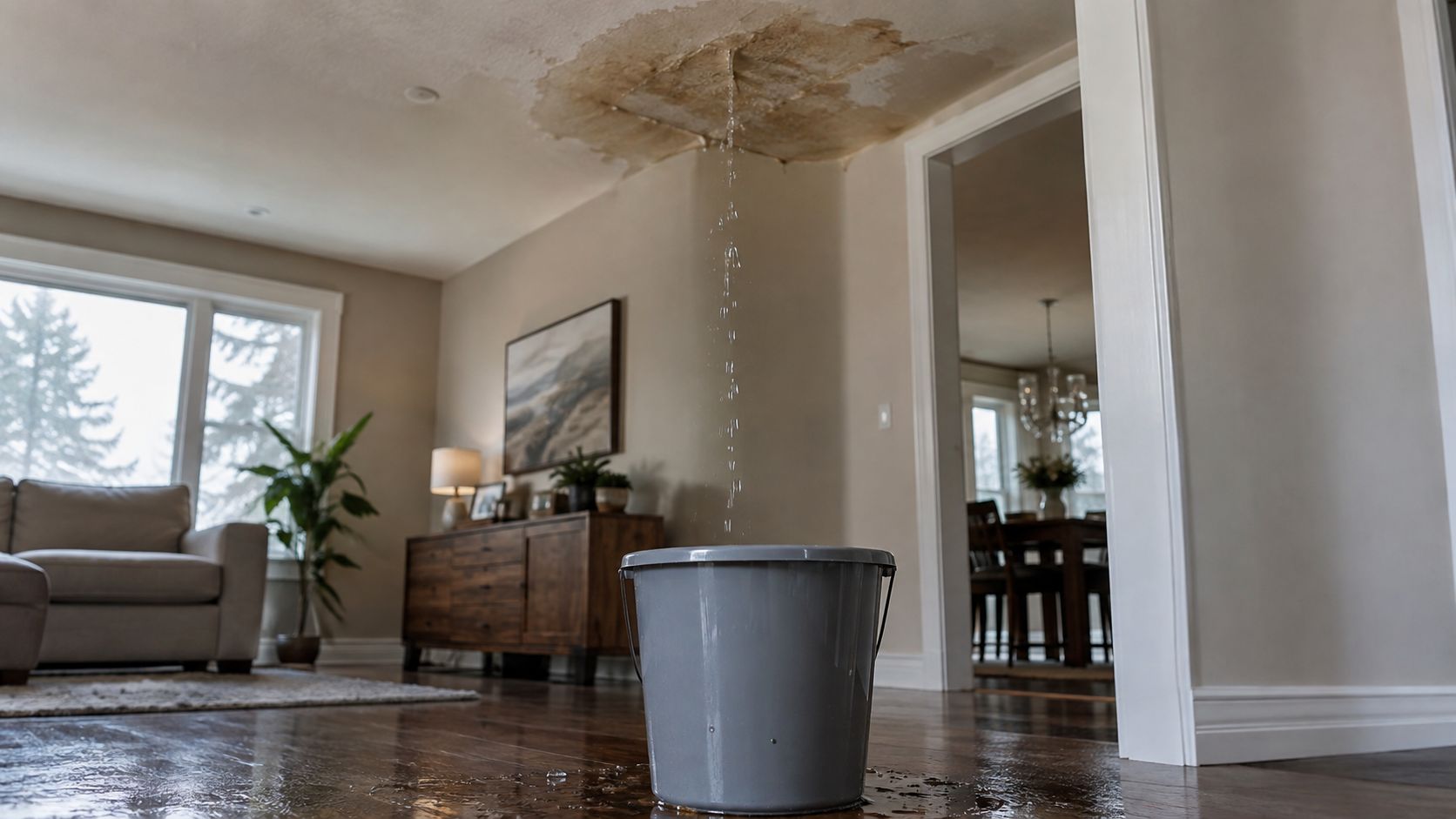
Water dripping from the ceiling is hard to ignore. What is harder to figure out is where it is actually coming from.
The stain or drip you see is not always directly below the source. Water can travel along pipes, floor joists, roof decking, insulation and other building materials before it finally reaches the ceiling below.
A leaking ceiling can be caused by plumbing, a bathroom fixture, an appliance, a roof problem, heavy rain or even water coming from another unit. Whatever the source, the priority is the same: protect yourself, stop the water if it is safe to do so and find out how far the moisture has travelled.
If the problem requires water damage mitigation and repair, EMRG can provide a one-call solution by connecting you with a local restoration member who can help stop the source, mitigate the damage and restore the property.
Here is what to do when water is leaking from your ceiling and who you may need to call.
What Should You Do If Water Is Leaking From the Ceiling?
Start with safety. A ceiling that has absorbed water can become unstable, and water around electrical systems creates an additional hazard.
1. Stay Away From a Sagging or Bulging Ceiling
If the ceiling is sagging, bulging, cracking or heavily saturated, stay out from underneath it.
Wet drywall can become heavy and lose strength. Keep children and pets away from the area as well.
Do not puncture or cut open a bulging ceiling yourself. There may be electrical wiring, insulation or a larger amount of water above it.
2. Be Careful Around Electricity
Water leaking around a ceiling light, fan or other electrical fixture should be treated seriously.
Do not touch wet fixtures, switches or electrical equipment. Do not stand in water where electrical systems may have been affected.
If there is any concern about electrical safety, keep away from the area and contact a qualified professional.
3. Stop the Water Source If You Safely Can
If you know the leak is coming from a plumbing fixture, appliance or water line, shutting off the appropriate valve can help limit further damage.
If you cannot identify the source, or accessing it would require climbing onto a wet roof, opening a damaged ceiling or entering an unsafe area, leave it to a qualified professional.
Stopping the source matters, but it does not necessarily mean the water damage is resolved.
4. Move Belongings Away From the Area
If the area is safe, move furniture, electronics, rugs and other belongings away from the leak.
A container can be placed beneath dripping water if the ceiling above it appears stable and there are no electrical concerns.
5. Document the Damage
Take photos and video before moving or removing damaged materials when it is safe to do so.
Document:
- The ceiling stain or active leak
- Affected walls and flooring
- Damaged furniture or belongings
- The suspected water source
- Any other rooms or floors affected
If an insurance claim is needed, this information can help document what happened. EMRG’s guide on how to make a successful water damage insurance claim in Canada explains what to record after a water loss.
Why Is Water Leaking From My Ceiling?
There are several possible causes, and the location of the drip does not always identify the source.
Water often follows the easiest path through a building before becoming visible.
A Leaking Pipe or Plumbing Connection
Plumbing is one of the first places to investigate when there is a bathroom, kitchen, laundry room or water line above the ceiling.
Possible sources include:
- Water supply lines
- Drainpipes
- Pipe fittings
- Toilets
- Bathtubs and showers
- Sinks
- Hot water tanks
Some plumbing leaks are obvious. Others may only occur when a particular fixture is being used.
A Bathroom Leak
A ceiling below a bathroom can leak even when there is no broken pipe.
Water may escape from around a bathtub, shower enclosure, toilet, drain or failed seal. If staining or dripping repeatedly appears after someone showers, takes a bath or uses a particular fixture, that pattern can help narrow down the cause.
A Roof Leak
If water appears during or after rain, the roof or another part of the building envelope may be involved.
Possible causes include damaged roofing materials, flashing failures, storm damage or openings around roof penetrations.
The interior leak may be several feet away from where water actually entered the roof. Once inside, water can travel along roof decking, rafters or insulation before reaching the ceiling.
During winter, Canadian homes can also experience leaks caused by ice dams. EMRG’s guide to ice dam water damage in Canada explains how melting snow can work its way beneath roofing materials and into ceilings and walls.
A Leaking Appliance
Washing machines, dishwashers, refrigerators with water lines and other appliances can leak into the floor below them.
In a multi-storey home, that water may eventually appear through the ceiling on the level below.
HVAC or Condensation Problems
Heating and cooling equipment can also be involved.
A blocked or damaged condensate drain, overflowing drain pan or another HVAC issue may allow water to collect above a ceiling.
Water From a Unit Above
In condos, apartments and other multi-unit properties, the source may not be inside your unit at all.
Water can travel down from another unit or from a shared plumbing or building system.
If you live in a condominium, strata or rental property, notify the appropriate property manager, landlord, condominium corporation or strata representative promptly. Finding the source may require access to more than one unit.
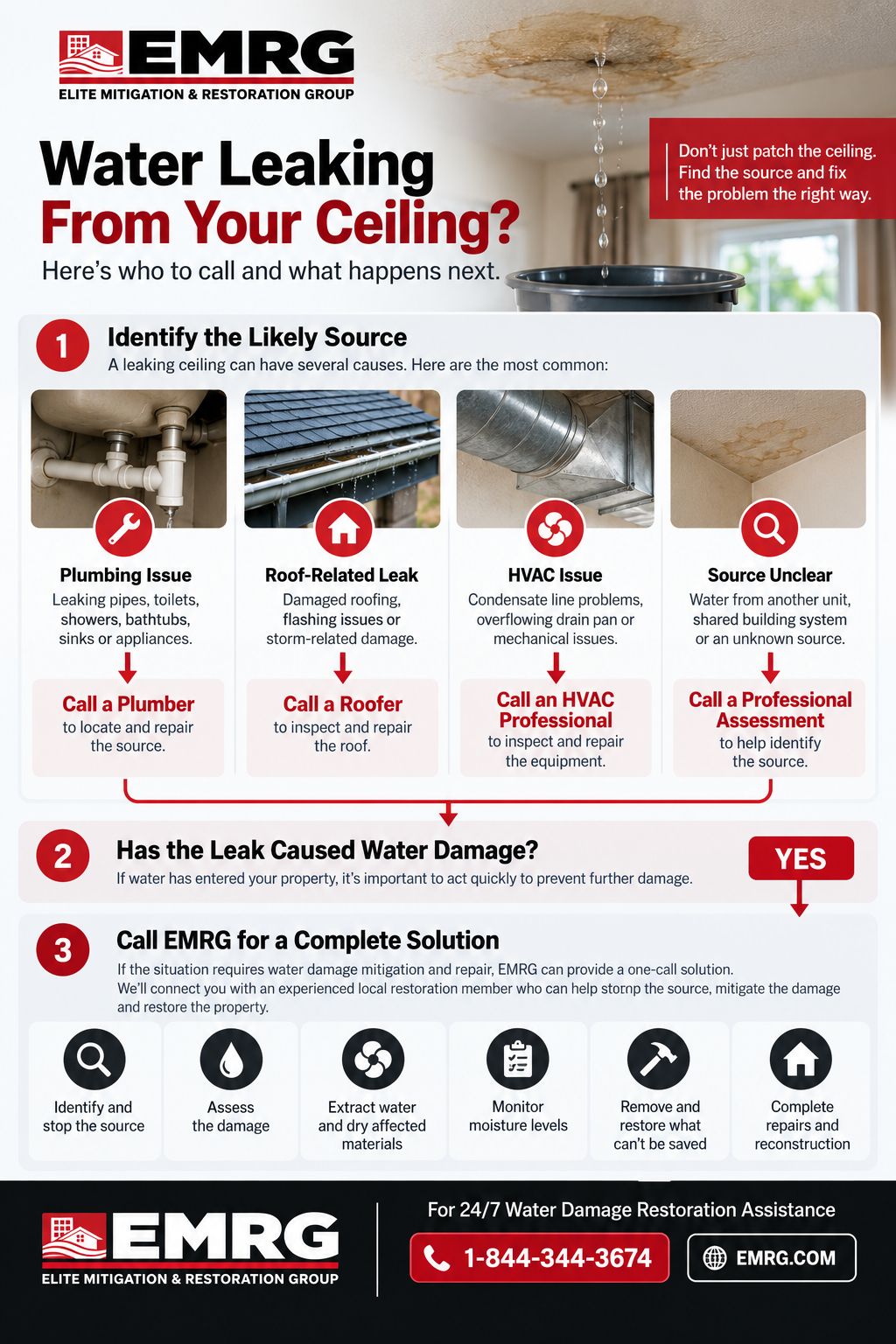
Who Do You Call for a Ceiling Leak?
It depends on what is causing it.
In some cases, one trade may be able to address the source. In others, several steps are needed because stopping the leak, mitigating the water damage and repairing the property are separate parts of the job.
Call a Plumber When the Source Is Plumbing
If the leak appears to come from a pipe, toilet, shower, bathtub, drain or plumbing fixture, a plumber can locate and repair the source.
Once the leak is repaired, any wet building materials still need to be assessed. Fixing the pipe does not automatically dry the ceiling, insulation or surrounding materials.
Call a Roofer for a Roof-Related Leak
If water appears during rain, after a storm or around an area directly below the roof, a roofing contractor may need to inspect the roof and building envelope.
Fixing the roof stops additional water from entering. It does not remove moisture already inside the ceiling, attic, insulation or walls.
Call an HVAC Professional When Mechanical Equipment Is Involved
If an air-conditioning system, condensate line or other mechanical equipment is causing the leak, an HVAC professional may be required to repair the equipment.
Call EMRG When the Problem Requires Water Damage Mitigation and Repair
If the leak has caused water damage, the job often goes beyond fixing the source.
A restoration contractor deals with the water that entered the property and the materials it affected. Depending on the loss, this may include:
- Identifying where the water came from
- Coordinating or completing the work needed to stop the source
- Moisture assessment
- Water extraction
- Structural drying
- Monitoring moisture levels
- Protecting contents
- Removing materials that cannot be restored
- Cleaning and restoration
- Reconstruction and repairs
This distinction is important.
Fixing a leaking pipe does not dry the ceiling.
Repairing a roof does not remove moisture trapped in insulation.
Stopping the source is only the first part of resolving the problem when water damage has already occurred.
EMRG can provide a one-call solution by connecting you with an experienced local restoration member who can help identify the source, coordinate or complete the work needed to stop the water intrusion, assess the resulting damage, begin mitigation and drying, and carry the restoration through to the necessary repairs.
The goal is not simply to stop the leak. It is to fix the problem, dry the affected materials and restore the property properly.
If significant water has entered the property, EMRG’s guide to emergency water extraction explains how professional extraction and structural drying work together.
Can a Small Ceiling Leak Cause Serious Damage?
It can.
The amount of visible water does not always show how much of the building has been affected.
A small stain may have moisture behind it. Water can move through insulation, drywall, framing, flooring and wall cavities without creating a large puddle.
How serious the damage becomes depends on several factors:
- How much water entered
- How long the area remained wet
- Where the water travelled
- Which materials were affected
- Whether the water was contaminated
- Whether drying started promptly
This is why recurring stains or small leaks should not simply be painted over.
For a closer look at how relatively small amounts of water can affect a property, read How Much Water Does It Take to Cause Damage to Your Property?
How Do You Know If Water Is Still Behind the Ceiling?
You often cannot tell just by looking at it.
A ceiling may stop dripping while drywall, insulation, wood framing or adjacent areas remain damp.
Possible signs of remaining moisture include:
- A stain that continues to spread
- Soft or swollen drywall
- Bubbling or peeling paint
- A musty odour
- Warped trim or nearby materials
- Recurring staining
- Elevated humidity in the area
Restoration professionals can take moisture readings to determine whether building materials are still wet.
Thermal imaging may also be used to identify temperature patterns that require further investigation, but moisture readings are needed to confirm actual moisture conditions.
The goal is not simply to make the ceiling look dry. It is to determine where the water travelled and whether those areas have dried properly.
Can a Ceiling Leak Cause Mould?
Yes, if moisture remains.
Mould needs moisture to grow, and wet drywall, insulation, wood and other porous building materials can create favourable conditions.
Health Canada recommends correcting leaks or water infiltration and drying wet materials promptly. Its guidance states that mould can begin growing in an area with excessive moisture within 48 hours.
That does not mean every ceiling leak will create mould at exactly the same time. Conditions vary from one property and material to another.
The important point is that hidden moisture should not be left sitting inside a ceiling cavity.
Does Home Insurance Cover a Leaking Ceiling in Canada?
It depends on what caused the water damage and the specific terms of your insurance policy.
Canadian home insurance commonly covers certain sudden and accidental water losses, such as water escaping from indoor plumbing, heating or air-conditioning systems or some household appliances.
Roof leaks can be more complicated. Interior water damage resulting from a roof leak may be covered, while repairing a roof that failed because of wear, deterioration or poor maintenance may not be.
Other types of water damage, including sewer backup and overland flooding, may require optional coverage or endorsements.
Every policy is different.
If a ceiling leak may result in an insurance claim:
- Take photos and video when safe
- Record when the leak was discovered
- Take reasonable steps to prevent further damage
- Contact your insurer or broker promptly
- Ask what coverage and deductible apply
- Keep documentation related to emergency work
A restoration contractor can document the affected areas and the mitigation work being completed. The insurer determines whether the loss is covered.
If water damage mitigation and restoration are required, EMRG can simplify the next step. One call can connect you with a qualified local member who can help get the source under control, assess the damage, begin mitigation and drying, and move the property through restoration and repair.
What Happens During Professional Ceiling Water Damage Restoration?
The exact process depends on the source and extent of the damage.
The Source Is Identified and Controlled
Before effective drying can take place, the water must stop entering the property.
Depending on the cause, the restoration company may address the source directly or coordinate with the appropriate plumber, roofer, HVAC professional or other trade.
The important point is that the source must be controlled before the property can be properly restored.
The Extent of the Water Damage Is Assessed
The visible stain is only the starting point.
Moisture readings help determine whether water has affected drywall, insulation, walls, flooring, framing or nearby rooms.
Wet Materials Are Evaluated
Not every wet material automatically needs to be removed.
The restoration contractor considers the material, water source, level of contamination, length of exposure and whether the material can be properly dried and restored.
Structural Drying Begins
Where appropriate, professional air movers and dehumidification equipment may be used to remove moisture from the affected environment and building materials.
Drying is monitored using measurements rather than appearance alone.
Repairs Are Completed
After drying is complete, the property can move into the repair stage.
Depending on the damage, this may involve drywall, insulation, paint, flooring or other reconstruction.
When a loss requires source control, mitigation and repairs, working through EMRG can help keep the process connected from start to finish. Rather than treating each stage as a separate problem, EMRG can connect you with a local restoration member who can help coordinate the work needed to stop the water, mitigate the damage and restore the property.
Water Damage Restoration Across Canada
EMRG is a national network of vetted property restoration contractors serving communities across Canada, with members in:
British Columbia: Premium Restoration
Alberta: Eclipse Restoration, PURE Restoration
Saskatchewan: Restorex Disaster Restoration
Ontario: Paul’s Restorations, Alpine Construction, Complete Restoration Services, Woodhouse Restorations, Leda Restoration & General Contracting, Findlay Restoration
Quebec: Gestion Artek, Groupe Liracon
Nova Scotia: SystemCare Cleaning & Restoration
If water is leaking through your ceiling or has already caused damage, EMRG can be your one call to get the entire restoration process moving.
We’ll connect you with an experienced local member who can help identify the source, coordinate or complete the work required to stop the water intrusion, assess the damage, begin mitigation and structural drying, and carry the restoration through to the necessary repairs.
Call EMRG at 1-844-344-3674 for 24/7 water damage restoration assistance.
Frequently Asked Questions About Ceiling Leaks
Is Water Leaking From the Ceiling an Emergency?
An active ceiling leak should be addressed promptly. It becomes particularly urgent if the ceiling is sagging or bulging, water is near electrical fixtures, the leak is spreading quickly, several areas are affected or the source may be contaminated.
Should You Poke a Hole in a Ceiling That Is Holding Water?
Do not puncture a bulging or heavily water-damaged ceiling yourself. Saturated drywall may be unstable, and electrical wiring, insulation or other hazards may be concealed above it. Keep clear and have the area assessed.
Can a Plumber Fix a Water-Damaged Ceiling?
A plumber can repair a plumbing source, but that does not necessarily address the resulting water damage. Wet drywall, insulation, framing and other materials may require assessment and structural drying.
If the leak has caused property damage, EMRG can connect you with a local restoration member who can help take the problem from source control through mitigation, drying and repair.
Why Does My Ceiling Leak Only When It Rains?
A leak that appears during or after rainfall may indicate a problem with the roof, flashing or another part of the building envelope. Water can travel before becoming visible, so the ceiling stain may not be directly below the point where rain entered.
Does a Water Stain Mean the Ceiling Is Still Wet?
Not always. A stain can remain after the material has dried. However, you cannot confirm moisture conditions from appearance alone. Recurring or expanding staining should be investigated.
How Long Does a Water-Damaged Ceiling Take to Dry?
There is no single drying time that applies to every ceiling leak. It depends on the amount of water, materials affected, insulation, humidity, airflow and how far the moisture travelled. Professional restoration contractors use moisture readings to determine drying progress rather than relying on a fixed number of days.
A Ceiling Leak Should Tell You to Look Further
When water appears through a ceiling, the visible drip is only one part of the problem.
The source needs to be identified and stopped. The affected materials also need to be checked to determine where the water travelled and whether moisture remains hidden.
If the problem requires water damage mitigation and repair, EMRG can be the one call that gets the entire process moving. We connect homeowners, businesses, property managers and insurance professionals with accredited independent restoration contractors across Canada who can help control the source, mitigate the damage, dry the affected materials and restore the property through the repair stage.
For water damage restoration assistance, call EMRG 24/7 at 1-844-344-3674.