
Emergency Water Extraction: Protecting Your Property Starts Here
Posted July 30, 2026
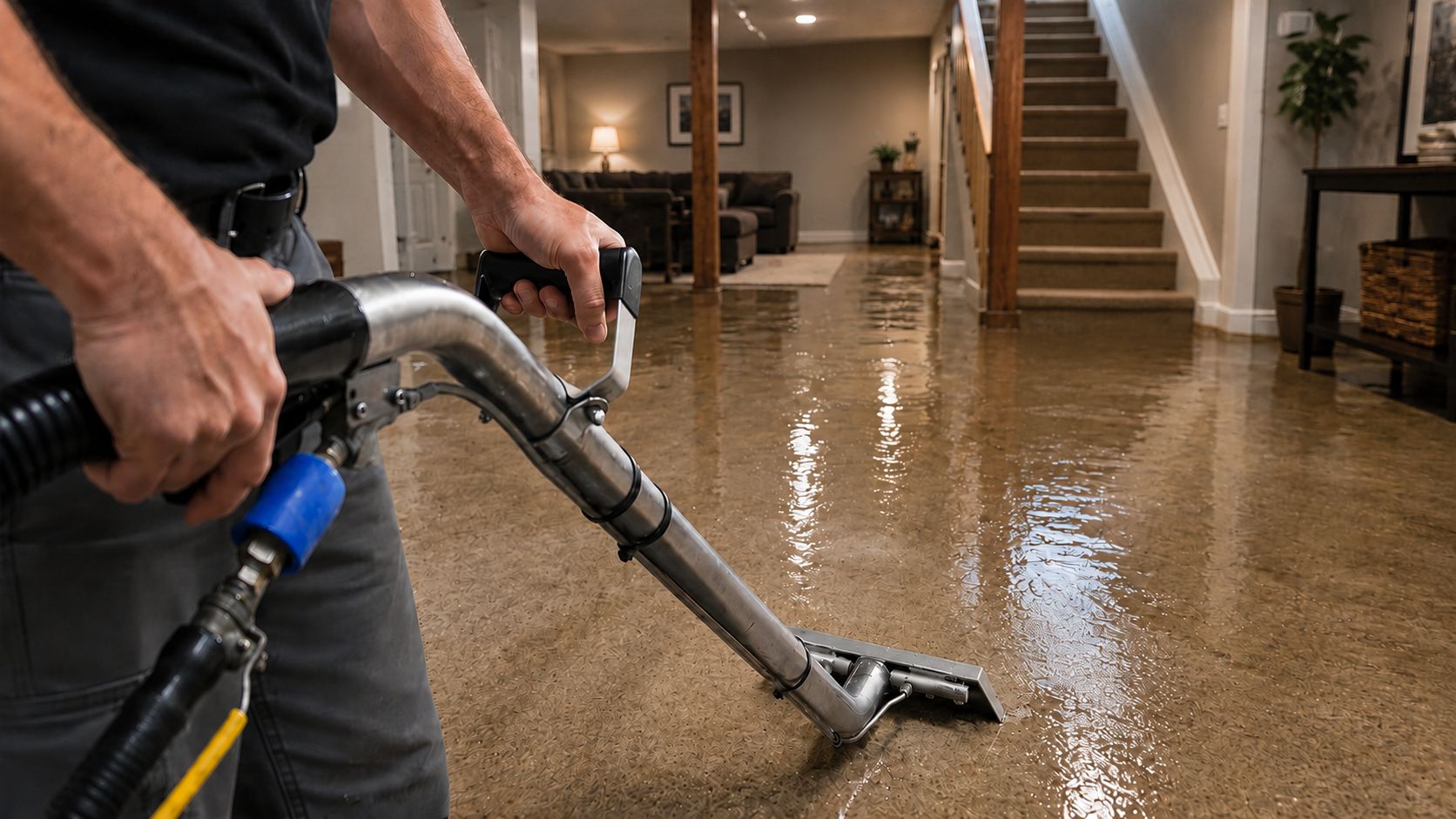
Water can spread through a property quickly. A burst pipe, overflowing fixture, failed appliance, sump pump problem or storm-related leak can soak flooring, drywall, insulation, cabinetry and belongings before the full extent of the damage is visible.
Removing standing water is essential, but it is only the first step. Moisture can remain beneath flooring, behind baseboards and inside walls after the surface appears dry. Without proper extraction and structural drying, damage can continue and the restoration scope may grow.
Need emergency water extraction now? EMRG members are available 24/7 across Canada. Call 1-844-344-3674 to connect with a vetted local restoration contractor for residential, commercial, multi-unit or large-loss restoration.
What Is Emergency Water Extraction?
Emergency water extraction is the professional removal of standing and excess water from a home, business or multi-unit property after a water-related loss.
Restoration teams may use pumps, portable extraction units, truck-mounted systems and specialized attachments selected for the water volume, affected materials and property conditions.
Professional extraction may be required after:
- Burst or leaking pipes
- Overflowing toilets, sinks or bathtubs
- Washing machine, dishwasher or hot water tank failures
- Sump pump failures and flooded basements
- Roof, window or storm-related leaks
- Sewer backups
- Water released during firefighting
- Water travelling between units or floors
The goal is to remove as much water as possible before controlled structural drying begins.
Why Fast Action Matters
Water rarely stays where it first appears. It can move beneath flooring, enter wall cavities, soak insulation and travel to rooms or units below.
Porous materials such as drywall, carpet, underpad, insulation and particleboard absorb moisture quickly. Wood flooring, subfloors, cabinetry and framing may also be affected. The longer materials remain wet, the harder they may be to restore.
Prolonged dampness can support mould growth. Health Canada advises that homes and furnishings are less likely to develop mould when dried within 48 hours after a flood. Not every material can be saved, but assessment, extraction and drying should begin as soon as the property can be entered safely.
An EMRG member can identify how far the water has travelled, begin emergency extraction and create a drying plan based on actual moisture conditions.
What to Do Immediately After Water Damage
Keep away from unsafe areas
Do not enter standing water if outlets, wiring, electrical panels or appliances may have been affected. Stay clear of sagging ceilings, damaged structures and other visible hazards. Treat affected electrical components as live until a qualified professional confirms otherwise.
Stop the source when safe
If the water is coming from a plumbing fixture or supply line, shut off the nearest valve or main water supply only if you can do so safely.
A plumber, roofer or other qualified trade may be needed to correct the source. Extraction does not repair the cause of the loss.
Avoid contaminated water
Water from a sewer backup, drain, toilet overflow, outdoor flooding or unknown source may contain sewage, chemicals, bacteria or sharp debris. Keep children and pets away and avoid handling wet materials without suitable protection.
Document the damage
Take photographs and video when safe. Record the source, affected areas, damaged belongings and any water that travelled to another floor or unit. Do not discard items before documenting them unless they create an immediate safety risk.
Call for emergency restoration
Professional help is recommended when there is standing water, widespread saturation, possible contamination or hidden moisture.
EMRG members provide 24/7 water extraction, moisture assessment, structural drying and restoration support. Call 1-844-344-3674 for immediate assistance.
Notify your insurer or broker
If a claim may be involved, report the loss promptly. Explain what happened, when it was discovered and what emergency work is underway.
The restoration contractor can document the damage and mitigation work, but does not determine coverage. That decision belongs to the insurer.
When Is Professional Water Extraction Needed?
A very small clean-water spill on a non-porous surface may be manageable with towels or a wet vacuum. Many losses, however, extend beyond what can be seen.
Consider professional extraction when:
- Standing water affects one or more rooms
- Carpet, underpad or flooring is saturated
- Water has travelled beneath flooring or into walls
- Drywall, insulation, cabinetry or ceilings are wet
- Several rooms, units or floors are affected
- Sewage or outdoor floodwater is involved
- Electrical or mechanical systems may be affected
- Water has been present for an unknown period
- The area remains damp, musty or stained
- A commercial or multi-unit property is involved
Professional moisture assessment helps determine what can be dried, what may need removal and where equipment should be placed.
What Happens During Emergency Water Extraction?
The process varies by property, source and contamination level, but generally includes the following steps.
- Emergency assessment
The team reviews the source, affected areas, contamination, electrical or structural hazards and whether occupants can safely remain.
- Property protection and containment
Affected spaces may be contained, while furniture, equipment and belongings are moved, elevated or protected. Commercial and multi-unit work may also require coordinated access.
- Standing water removal
Pumps and portable or truck-mounted systems remove water from carpet, hard surfaces and difficult areas. Moisture may still remain inside building materials after extraction.
- Moisture inspection and mapping
The team checks beneath flooring, behind baseboards, inside drywall and insulation, under cabinets and within subfloors, ceilings or wall cavities. Readings define the scope and track drying progress.
- Removal of non-restorable materials
Wet materials do not always need removal. Decisions depend on the material, contamination, exposure time and whether proper cleaning and drying are possible. Porous materials exposed to sewage or floodwater may require disposal.
- Structural drying and monitoring
Air movers and commercial dehumidifiers may be installed after extraction. Air movement encourages evaporation, while dehumidification removes moisture from the air.
The team monitors moisture, temperature and humidity, adjusting equipment as needed until materials reach an appropriate drying target.
- Cleaning and repairs
Once dry, the property may require cleaning, sanitation, odour control, material replacement or reconstruction. Contents may also need cleaning, deodorizing or storage.
EMRG can support the full process, from emergency mitigation through repairs and reconstruction. Contact us 24/7 at 1-844-344-3674.
Water Extraction Is Not Structural Drying
These services are connected, but they are not interchangeable.
Water extraction removes standing and recoverable water.
Dehumidification reduces excess moisture in the air.
Structural drying addresses moisture retained inside walls, flooring, framing and other materials.
Water damage restoration is the complete process. It may include emergency response, extraction, drying, cleaning, contents work, demolition and repairs.
A room can look dry while moisture remains below the surface. Professional readings and monitoring help prevent hidden dampness from being overlooked.
Will a Dehumidifier Help?
A dehumidifier can support drying, but it does not replace extraction. Standing water should be removed first.
A household unit may help with minor humidity, but often lacks the capacity for saturated materials or several rooms. Professionals select equipment for the size and conditions of the loss.
Never place electrical equipment in standing water or run extension cords through wet areas.
How Long Does Water Extraction Take?
Extraction may take several hours or longer. Timing depends on water volume, affected rooms, building materials, accessibility, contents, contamination and whether water is still entering.
Extraction time is not the same as total drying time. Standing water may be removed during the initial visit, while structural drying continues for several days. Large commercial losses, contamination and extensive hidden moisture can take longer.
A responsible contractor will use moisture readings to guide the timeline rather than promise an exact completion date before assessing the property.
Can You Remove Floodwater Yourself?
A very small, immediate clean-water spill may be manageable when no porous materials, walls or flooring are saturated and there are no electrical concerns.
Professional help is safer when water is widespread, contaminated, deep or hidden. Do not handle sewage, affected electrical systems, unstable ceilings or heavily saturated building materials yourself.
Does Insurance Cover Emergency Water Extraction in Canada?
Coverage depends on the cause of damage, policy wording, limits, exclusions and optional endorsements.
Sudden plumbing damage may be treated differently from gradual leakage, maintenance-related seepage, sewer backup or overland flooding. In Canada, sewer backup and overland flood coverage are often optional and can vary by insurer and property.
After discovering water damage:
- Contact your insurer or broker promptly
- Photograph and record the damage when safe
- Keep records of emergency expenses
- Preserve damaged materials when practical
- Ask what documentation is required
- Confirm coverage and deductible details directly
- Avoid permanent repairs until you receive direction
Urgent mitigation may still be necessary when water is spreading or safety is at risk. Notify the insurer as soon as reasonably possible.
EMRG members can provide photographs, moisture readings, drying records and other documentation related to their work.
Commercial and Multi-Unit Water Damage
Water damage in a commercial, condominium, strata, rental or institutional property may affect several areas, interrupt operations and damage inventory, equipment or common spaces.
A coordinated response may involve:
- Tracking the source and path of water
- Coordinating access to multiple areas
- Protecting occupants, employees and visitors
- Prioritizing critical operations
- Moving or protecting equipment and contents
- Documenting damage for owners and insurers
- Managing a larger drying environment
- Planning repairs around continued occupancy
For larger losses, EMRG’s national network can provide additional knowledge, equipment and resources.
Emergency Water Extraction Across Canada
EMRG connects property owners and insurance professionals with independently operated restoration contractors serving local communities.
Members and strategic partners provide emergency water extraction in and around:
- Alberta: Calgary, Edmonton and Whitecourt
- British Columbia: Vancouver, Delta and Abbotsford
- Ontario: Aurora, Barrie, Orillia, Gravenhurst, Brantford, Burlington, Hamilton, Kitchener-Waterloo, Mississauga, Niagara Falls, Toronto, Pickering, Windsor and Tecumseh
- Saskatchewan: Regina, Saskatoon and Melville-Yorkton
- Quebec: Saint-Léonard and Laval
- Nova Scotia: Bridgewater, Halifax-Dartmouth, New Glasgow, New Minas, Port Hawkesbury, Sydney, Truro and Yarmouth
Individual locations may also serve surrounding communities. Call the national emergency number to be connected with the appropriate contractor: 1-844-344-3674.
Why Call EMRG After a Flood or Water Damage?
EMRG gives homeowners, businesses, property managers and insurance professionals one point of contact for a vetted local restoration contractor.
EMRG members offer:
- 24/7 emergency availability from IICRC-certified contractors.
- Local service from independent Canadian companies
- Professional extraction and structural drying
- Moisture assessment and monitoring
- Residential, commercial and multi-unit experience
- Large-loss support
- Insurance-related documentation
- Contents cleaning and restoration
- Repairs and reconstruction where required
- Support from a national restoration network
Each contractor remains locally operated while being backed by EMRG’s national network.
Water is already inside the property. The next step is to stop it from causing more damage.
Call EMRG at 1-844-344-3674 for 24/7 emergency water extraction.
Frequently Asked Questions
What information should I provide when calling?
Provide the property address, known source, affected rooms or floors and whether water is still entering. Mention sewage, electrical or structural concerns immediately. Share your insurer and claim number if available.
Can wet hardwood flooring be saved?
Sometimes. It depends on the flooring, installation, contamination, amount of water and length of exposure. Water may also be trapped beneath the boards. A professional assessment is needed to determine whether controlled drying is appropriate.
Can I stay in the property during extraction?
It depends on the affected area and hazards. Occupancy may be possible when damage is limited and unaffected areas remain safe. Temporary relocation may be recommended for sewage, electrical hazards, structural concerns or major demolition.
Does extraction include damaged belongings?
Contents services may include moving, documenting, cleaning, drying, deodorizing and storing affected items. The work depends on the item, source of water and approved restoration scope.
What if water is coming from a wall or ceiling?
The source must be identified and stopped by the appropriate professional. The restoration contractor can then assess surrounding materials. Selective removal may be needed to access wet insulation or allow drying. Do not stand beneath a sagging ceiling.
Does extraction remove water-related odours?
Extraction removes water contributing to damp conditions, but odour treatment may also require cleaning, sanitation, material removal and further drying. Sewage-related odours require different procedures than clean-water losses.
Protect Your Property From the Start
Emergency water extraction can prevent an active water loss from becoming a larger restoration project. The sooner the source is controlled, standing water is removed and hidden moisture is assessed, the sooner proper drying can begin.
EMRG members are available 24/7 for water damage in homes, businesses and multi-unit properties across their Canadian service areas.
Call 1-844-344-3674 for emergency water extraction and restoration support.
Related Blogs:
Sewage Backup Cleanup: Why It Is Not a DIY Job
Does Home Insurance Cover Basement Flooding in Canada?
Water Leaking Into Basement After Heavy Rain: Causes and Solutions