
Sewage Backup Cleanup: Why It Is Not a DIY Job
Posted June 30, 2026
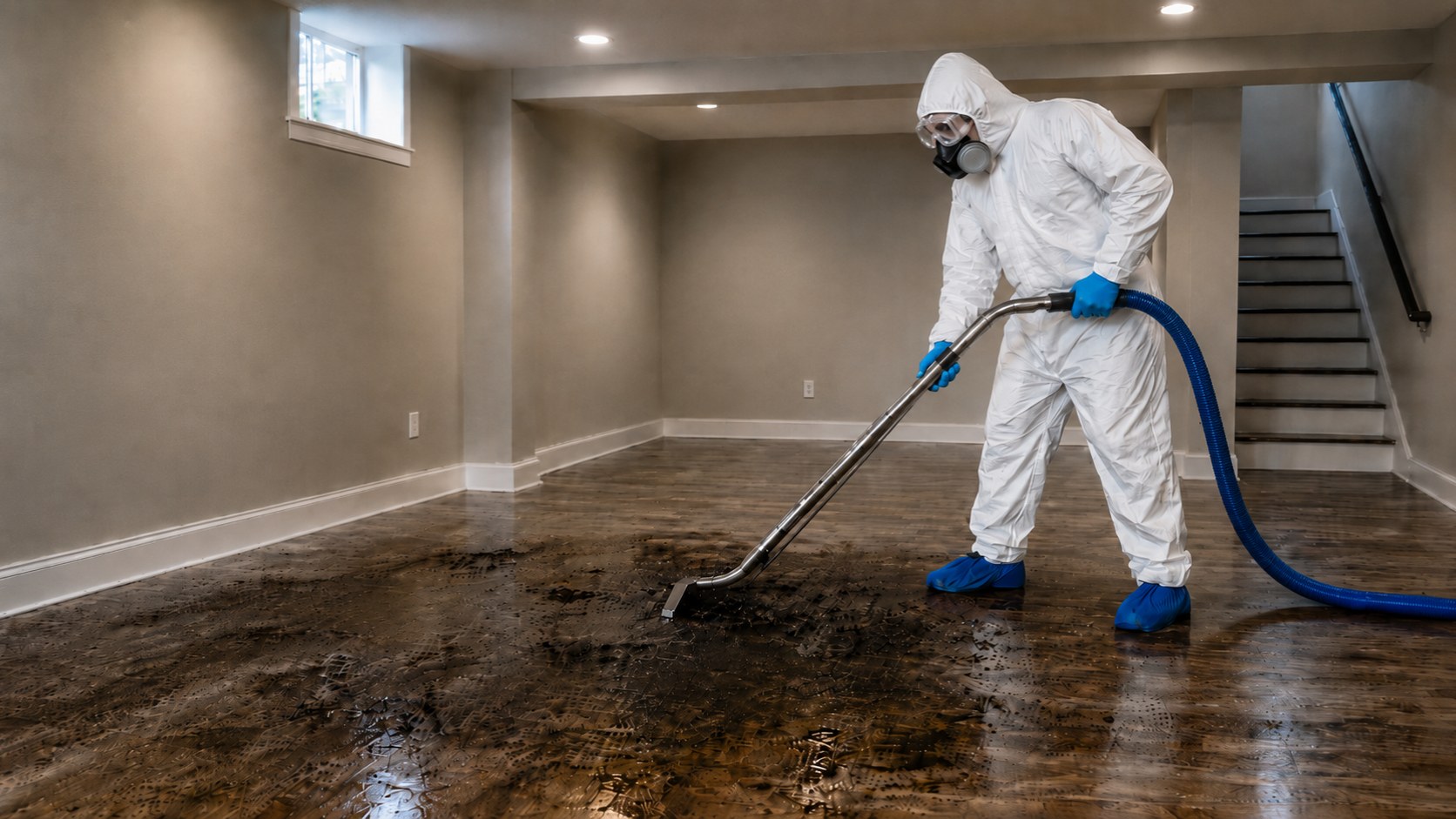
A sewage backup is one of the most stressful problems a homeowner or property manager can face.
It can happen suddenly. A floor drain backs up. A toilet overflows. Wastewater starts spreading across a basement, bathroom, laundry room, or commercial space. The first instinct is often to grab towels, a mop, or a wet vacuum and try to clean it before it gets worse.
That reaction is understandable.
But sewage backup cleanup is not the same as cleaning up a small plumbing leak or spilled water. Sewage water can contain bacteria, viruses, parasites, chemicals, and other contaminants. Even when the water looks minor, the affected area may not be safe to handle without the right equipment, protection, and cleaning process.
For Canadian homeowners, landlords, property managers, and business owners, the safest step is to treat a sewage backup as an emergency restoration issue, not a regular cleanup job.
If you are dealing with a sewage backup right now, avoid contact with the water and call your insurance provider. You can also contact EMRG 24/7 at 1-844-344-3674 to be connected with a vetted restoration contractor in your area.
What Is a Sewage Backup?
A sewage backup happens when wastewater flows back into a home or building instead of moving safely away through the sewer or septic system.
It may come up through:
- Floor drains
- Toilets
- Bathtubs
- Showers
- Laundry drains
- Utility sinks
- Basement plumbing fixtures
Common causes include blocked sewer lines, tree root intrusion, damaged pipes, heavy rainfall, municipal sewer overload, sump pump problems, or issues with a septic system.
In many homes, the basement is the first area affected because it is the lowest point in the property. That is why many people search for help with a sewage backup in the basement.
The problem is not only the water you can see. The bigger concern is what the water may have touched, where it travelled, and what contamination may remain after the surface looks dry.
Why Sewage Backup Cleanup Is Different From Regular Water Cleanup
Not all water damage is the same.
Clean water from a supply line leak is very different from sewage contaminated water. Sewage backup water may include human waste, bacteria, viruses, and other harmful materials. It can also soak into porous building materials and personal contents.
That can include:
- Drywall
- Insulation
- Carpet
- Underpad
- Baseboards
- Laminate flooring
- Subflooring
- Furniture
- Cardboard boxes
- Stored belongings
Once contaminated water enters these materials, simple surface cleaning may not be enough. Some materials may need to be removed and disposed of safely. Others may need professional cleaning, disinfection, drying, and odour control.
This is where a trained restoration contractor makes a major difference. EMRG members deal with water damage, sewage cleanup, drying, demolition, contents handling, and insurance documentation on a regular basis. That experience matters when the cleanup involves contamination.
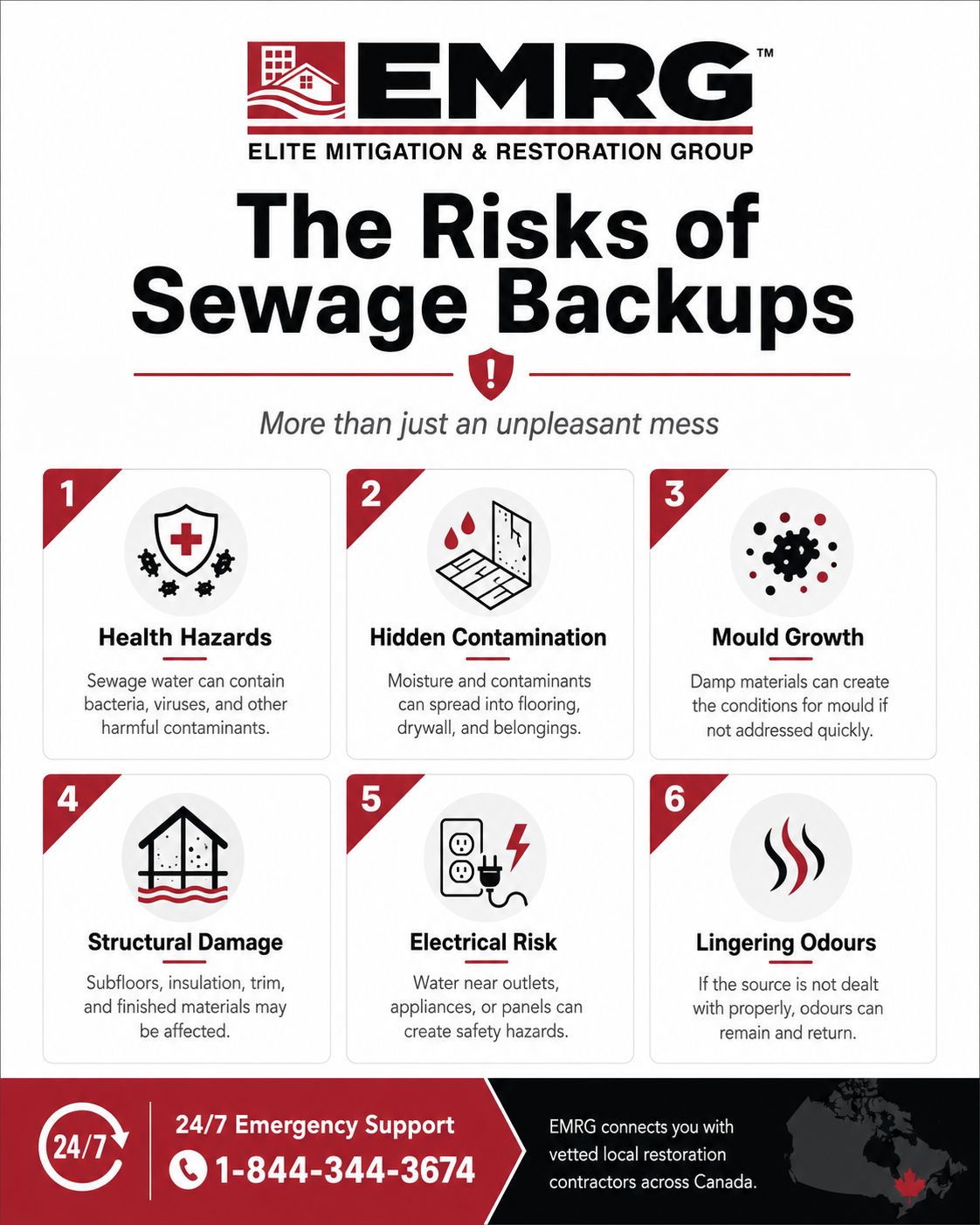
Why DIY Sewage Cleanup Can Create Bigger Problems
A sewage backup may look manageable at first. That is what makes it risky.
You may only see a small amount of water around a drain. You may think the issue is solved once the floor is mopped. You may not notice that contaminated moisture has spread under flooring, behind baseboards, into walls, or into stored contents.
Here are the biggest reasons sewage backup cleanup should not be treated as a DIY job.
- Sewage Water Can Be a Health Risk
Sewage contaminated water can carry germs that may cause illness. Direct contact, splashing, or touching contaminated materials can create exposure risks.
Children, older adults, pregnant people, and anyone with a weakened immune system may be more vulnerable. Pets should also be kept away from the affected area.
Basic household gloves and a mop are not enough for many sewage cleanup situations. Professional restoration crews use proper personal protective equipment and follow procedures designed to reduce exposure and cross contamination.
If sewage water has entered your home, avoid walking through it unless absolutely necessary. Do not let children or pets near it. If you must enter the area for safety reasons, limit contact and wash thoroughly afterward.
- Electrical Hazards May Be Present
Basement flooding and sewage backups can create electrical risks.
Water may come into contact with outlets, extension cords, appliances, furnaces, hot water tanks, laundry machines, or electrical panels. This can make the area unsafe before cleanup even begins.
Do not enter standing water if there is any chance it has contacted electricity. If it is safe to do so, shut off power to the affected area. If you are unsure, stay out and contact a qualified professional.
A restoration contractor can help coordinate the right next steps, but electrical concerns should be handled by qualified electrical professionals when needed.
- Contaminated Materials May Need to Be Removed
One of the biggest mistakes after a sewage backup is trying to save materials that cannot be safely cleaned.
Some hard, non porous surfaces may be cleaned and disinfected properly. But many porous materials can trap contamination.
This can include carpet, underpad, certain types of flooring, drywall, insulation, upholstered furniture, paper products, and cardboard storage boxes.
Keeping contaminated materials in place can create lingering odours, moisture problems, and potential health concerns. It can also make the property harder to restore properly.
Professional sewage cleanup often includes identifying what can be cleaned, what can be dried, and what should be removed.
- Moisture Can Hide Behind Finished Surfaces
A basement floor may look dry after mopping, but moisture can still be present.
Water can move:
- Under baseboards
- Behind drywall
- Beneath flooring
- Into subfloors
- Around wall cavities
- Under cabinets
- Into storage areas
Hidden moisture can lead to mould growth and structural damage if it is not addressed. This is especially important in finished basements, rental units, condos, and commercial spaces where water can travel beyond the obvious area.
Restoration contractors use moisture meters, thermal imaging when appropriate, air movers, dehumidifiers, containment methods, and drying plans to address the full affected area.
That level of inspection is difficult to match with household tools.
- Odours Can Return If Cleanup Is Incomplete
Sewage odour is not only unpleasant. It can be a sign that contamination or moisture remains.
A common DIY mistake is using scented cleaners, bleach, or deodorizers to cover the smell. That may help for a short time, but it does not solve the underlying problem.
Odour can remain in flooring, walls, contents, drains, and porous materials. It can also return when humidity rises or when the area warms up.
Professional sewage backup cleanup focuses on the source of the odour, not just the smell in the air. That may involve extraction, removal of affected materials, cleaning, disinfection, drying, and odour treatment.
- Insurance Documentation Can Be Missed
If you plan to open an insurance claim, documentation matters.
Before cleanup begins, your insurer may want information about the source of the backup, affected areas, damaged materials, and the steps taken to prevent further damage.
That does not mean you should wait in an unsafe situation. It does mean you should document what you can from a safe distance.
Helpful documentation may include:
- Photos and videos of the affected area
- Photos of the source, if visible
- A list of damaged belongings
- The time the backup was discovered
- Notes about who was contacted and when
- Invoices and reports from restoration professionals
EMRG members understand the importance of clear job documentation. That can be helpful for homeowners, property managers, business owners, brokers, and adjusters.
What Should You Do Immediately After a Sewage Backup?
If sewage backs up into your home or building, focus on safety first.
Here are the first steps to take.
Stay Out of the Affected Area
Avoid direct contact with sewage water. Keep children, pets, tenants, employees, and visitors away from the affected space.
If the affected area is in a business or multi unit building, restrict access as quickly as possible.
Stop Using Plumbing Fixtures
Do not flush toilets, run sinks, use showers, or operate laundry machines until the cause has been assessed. Using more water can make the backup worse.
Protect Yourself From Electrical Risk
Do not enter standing water if electrical equipment, outlets, or appliances may be affected. If safe, shut off power to the area. If not, wait for qualified help.
Take Photos From a Safe Distance
If it is safe to do so, take photos and videos before moving items or starting cleanup. Do not put yourself at risk to get documentation.
Call Your Insurance Provider
Ask whether your policy includes sewer backup coverage. Coverage depends on the policy, the cause of the loss, exclusions, limits, and endorsements.
Sewer backup coverage is often separate from standard home insurance coverage, so it is important to confirm your specific policy.
Call a Qualified Restoration Contractor
The sooner a trained restoration team assesses the damage, the better. Fast response can help reduce the spread of contamination, limit secondary damage, and support a more organized cleanup process.
EMRG is available 24/7 at 1-844-344-3674 and can connect you with a vetted local restoration contractor across Canada.
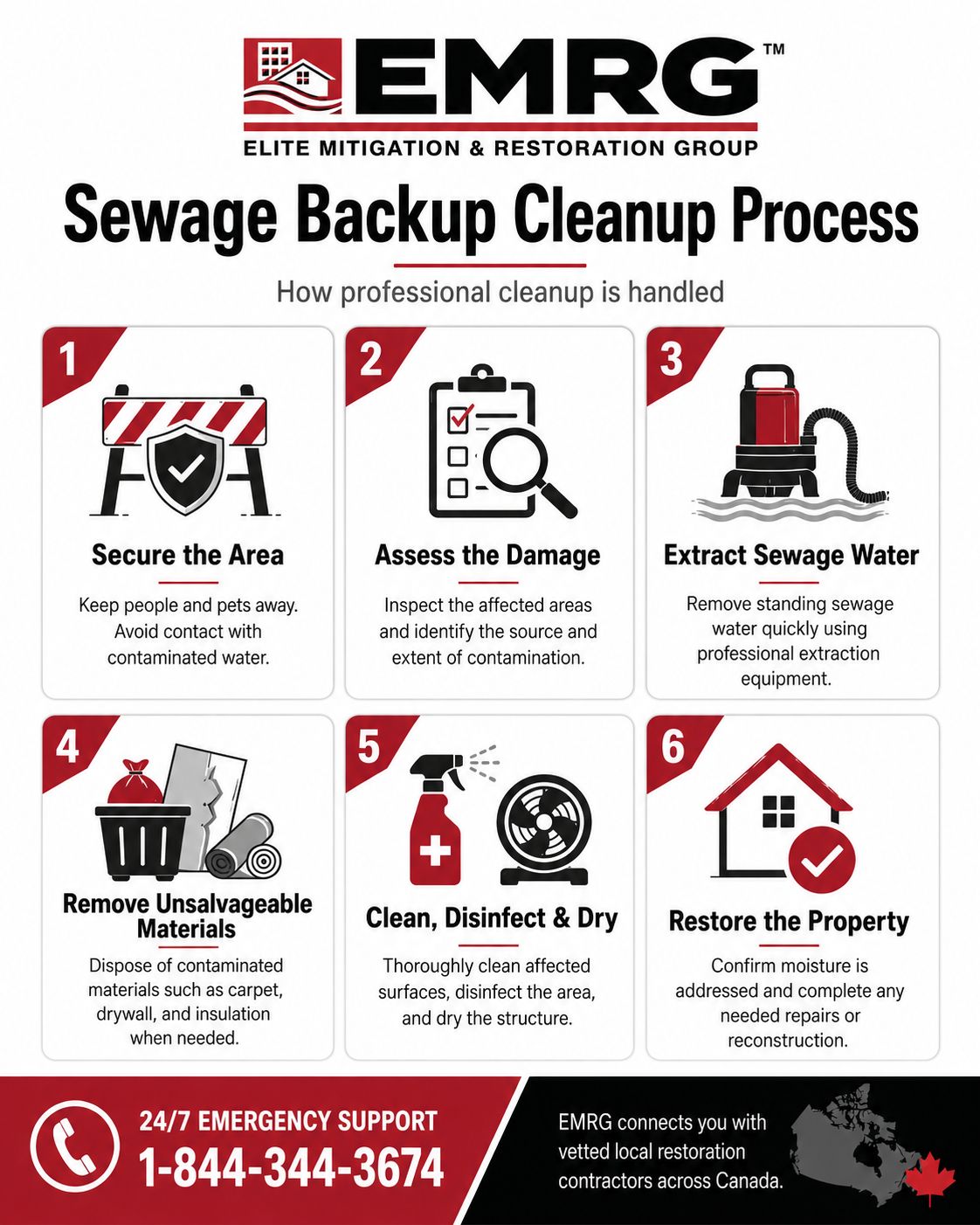
What Professional Sewage Backup Cleanup May Include
Every sewage backup is different. The right cleanup process depends on the source, the amount of water, the affected materials, and how long the water has been present.
A professional restoration process may include:
- Emergency inspection
- Safety assessment
- Containment of affected areas
- Sewage water extraction
- Removal of contaminated materials
- Cleaning and disinfection
- Structural drying
- Moisture monitoring
- Odour control
- Contents assessment
- Waste disposal based on local requirements
- Documentation for insurance purposes
- Repairs or reconstruction when needed
In a finished basement, this may include removing sections of drywall, insulation, flooring, trim, or built in materials. In a commercial building, it may involve coordinating with property managers, tenants, insurers, trades, and environmental professionals.
This is why sewage backup cleanup is not just a cleaning task. It is a restoration process.
Can You Use Bleach for Sewage Backup Cleanup?
Bleach is often the first product people think of after a sewage backup.
The problem is that bleach alone does not make a sewage loss safe. It does not remove contaminated porous materials. It does not dry hidden moisture. It does not assess what has travelled behind walls or under flooring. It can also create safety issues if mixed with other cleaning products.
Household disinfectants may have a role in small, limited surface cleaning situations, but they are not a replacement for professional sewage cleanup when contaminated water has spread through a home or building.
If sewage has contacted flooring, drywall, insulation, furniture, stored items, or HVAC related areas, get professional advice before trying to clean it yourself.
Does Insurance Cover Sewage Backup Cleanup in Canada?
Sewage backup coverage depends on your insurance policy.
In Canada, sewer backup is commonly treated as optional coverage or an endorsement. It may not be included automatically in a basic home insurance policy. Limits, deductibles, exclusions, and requirements can vary by insurer and province.
This is also different from overland flood coverage. Overland flooding usually refers to water entering from outside due to heavy rain, spring thaw, overflowing rivers, or similar sources. Sewer backup refers to water backing up through sewers, drains, or related systems.
Because these coverages can be separate, it is important to speak with your insurance broker or provider before a loss happens. After a loss, contact your insurer as soon as it is safe.
A restoration contractor does not decide whether your claim is covered. However, a professional contractor can help document the damage, explain the scope of work, and provide the cleanup and restoration services needed to protect the property.
Why Fast Response Matters
Time matters after a sewage backup.
The longer contaminated water sits, the more it can spread. Materials may absorb moisture. Odours can become harder to control. Mould risk can increase. More contents may become unsalvageable. The restoration scope may also become more complicated.
Fast action can help:
- Reduce the spread of contamination
- Limit damage to building materials
- Improve the chance of saving certain contents
- Support cleaner documentation
- Reduce downtime for homes, rentals, and businesses
- Help move the restoration process forward
That is especially important for property managers and commercial clients. A sewage backup can affect tenants, customers, employees, neighbouring units, and business operations.
Why Choose EMRG for Sewage Backup Cleanup?
A sewage backup is not the time to search blindly for the cheapest cleanup option.
You need a restoration contractor who understands contamination, drying, safe removal, documentation, and communication. You also need someone local who can respond quickly.
EMRG connects Canadians with vetted, independent restoration contractors across the country. EMRG members are established local companies with trained crews, specialized equipment, and experience handling emergency property damage in their own communities.
That gives you the best of both worlds:
- Local response from a contractor near you
- Support from a national Canadian restoration network
- Emergency service available 24/7
- Experience with water damage, sewage cleanup, fire, mould, storm, and property restoration
- Documentation that can support the insurance process
If you are dealing with a sewage backup, call EMRG at 1-844-344-3674. EMRG is available 24/7 and can help connect you with a trusted restoration contractor in your area.
Sewage Backup Cleanup Is Not Worth the Risk
A sewage backup can feel like something you need to clean up immediately with whatever supplies you have nearby.
But this is one of those situations where quick DIY cleanup can create bigger problems.
The water may be contaminated. Materials may need to be removed. Moisture may be hidden. Odours may return. Insurance documentation may matter. Most importantly, your health and safety come first.
If sewage has entered your home, rental property, condo, or business, do not treat it like ordinary water damage.
Stay safe, document what you can, contact your insurance provider, and get professional restoration help as soon as possible.
For emergency sewage backup cleanup, call EMRG 24/7 at 1-844-344-3674 to be connected with a vetted restoration contractor near you.
Frequently Asked Questions About Sewage Backup Cleanup
How do I know if it is a sewage backup or another type of water damage?
Signs of a sewage backup may include wastewater coming up through floor drains, toilets, tubs, showers, or basement drains. You may also notice a strong sewage odour, gurgling drains, slow draining fixtures, or water appearing in the lowest plumbing points of the home. If you are unsure, avoid contact with the water and have the source assessed.
Should I call a plumber or a restoration contractor first?
In many cases, you may need both. A plumber can help identify and repair the cause of the backup. A restoration contractor handles the contaminated water, damaged materials, drying, cleaning, disinfection, odour control, and restoration. If sewage has entered the property, restoration help should be arranged quickly.
Can a small sewage backup still be dangerous?
Yes. Even a small amount of sewage contaminated water can affect flooring, baseboards, drywall, and nearby contents. The size of the visible backup does not always show how far moisture or contamination has travelled.
What items usually cannot be saved after sewage contamination?
Porous items are often the hardest to save. This may include carpet, underpad, mattresses, upholstered furniture, cardboard boxes, paper items, insulation, and some types of flooring. The final decision depends on the material, exposure, condition, and local disposal requirements.
Will sewage backup smell go away on its own?
It might fade temporarily, but odour can return if contaminated materials or hidden moisture remain. Proper cleanup needs to address the source of the smell, not just the air.
Is sewage backup coverage the same across Canada?
No. Insurance coverage varies by insurer, policy, province, property type, limits, deductibles, and endorsements. Sewer backup coverage is often optional, so homeowners and property owners should confirm their policy details with their broker or insurance provider.
Can a sewage backup cause mould?
Yes. If moisture remains in building materials or contents, mould can develop. This is one reason proper drying and moisture monitoring are important after cleanup.
Do EMRG members work with insurance claims?
EMRG members regularly handle property damage restoration involving insurance claims. They can provide documentation, photos, reports, estimates, and restoration services that may help support the claim process. Coverage decisions remain with the insurance provider.
Related Blogs:
Black Water Damage: Causes, Risks, and How to Clean It Properly
Does Home Insurance Cover Basement Flooding in Canada?
How to Choose the Right Water Damage Mitigation Company