
Does Home Insurance Cover Basement Flooding in Canada?
Posted June 17, 2026
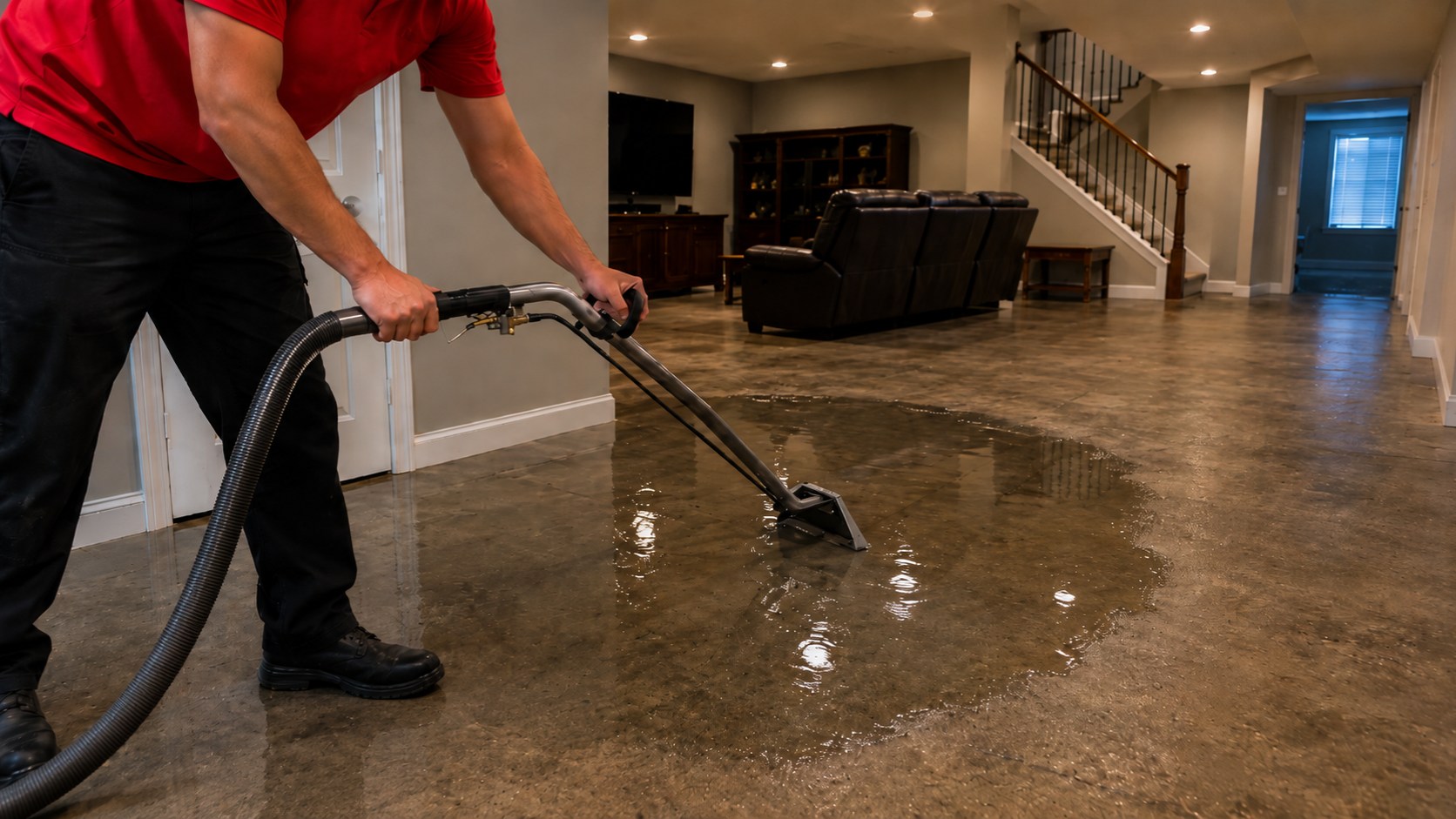
A flooded basement can leave homeowners with a lot of questions.
Is the damage covered? Should you call your insurance company first? Do you need a restoration contractor right away? What happens if the water came from a sewer backup, heavy rain, or a failed sump pump?
In Canada, home insurance coverage for basement flooding depends on the cause of the water damage and the coverage included in your policy. Some types of water damage may be covered under a standard home insurance policy. Others may require added coverage, such as sewer backup or overland water protection.
This guide explains common basement flooding scenarios, what may affect coverage, and what to do if water enters your basement.
The Cause of the Basement Flood Matters
Insurance companies look closely at how the water entered the home.
A flooded basement may look the same once the damage is done, but the source of the water can make a major difference in how a claim is handled.
Common causes of basement flooding include:
- Burst pipes
- Broken plumbing lines
- Sewer backups
- Failed sump pumps
- Heavy rain entering through foundation cracks
- Overland flooding
- Groundwater seepage
- Appliance leaks
- Drainage issues around the home
- Water entering through storm-damaged openings
This is why documentation matters. Photos, videos, moisture readings, and professional inspection notes can help show what happened and what areas were affected.
EMRG provides emergency restoration services across Canada and can help document water damage properly from the start. Contact us 24/7 at 1-844-344-3674.
When Basement Flooding May Be Covered
Many home insurance policies include coverage for sudden and accidental water damage from inside the home.
This may include damage caused by:
- A burst pipe
- A broken water supply line
- A sudden plumbing failure
- An overflowing fixture
- A leaking appliance, depending on the situation
- A water heater failure, depending on the cause and policy wording
For example, if a pipe suddenly bursts and floods your basement, your policy may respond if the damage meets the terms of your coverage.
That does not mean every plumbing-related flood is automatically covered. Long-term leaks, poor maintenance, repeated seepage, or damage that was not addressed in a reasonable time may be treated differently.
The safest approach is to contact your insurance provider and review your policy as soon as possible.
Is Sewer Backup Covered by Home Insurance?
Sewer backup is one of the most common and stressful basement flooding situations.
It can happen when wastewater backs up through a floor drain, toilet, shower, bathtub, or other drain connected to the sewer system.
In many Canadian home insurance policies, sewer backup is not automatically included in basic coverage. It often requires optional sewer backup coverage or a specific endorsement.
This is an important detail because sewer backup cleanup is not the same as clean water cleanup. Sewage water may contain harmful contaminants and should be treated as an emergency.
If sewage has entered your basement, avoid contact with the water if possible. Do not try to clean contaminated areas without proper protection and equipment.
EMRG can respond 24/7 to help with sewage cleanup, water extraction, sanitation, drying, and restoration. Call 1-844-344-3674.
Is Sump Pump Failure Covered?
Sump pump failure can also lead to serious basement flooding.
A sump pump may fail because of:
- Power loss
- Mechanical failure
- Heavy rainfall overwhelming the system
- Lack of maintenance
- A blocked discharge line
- Failure of a backup pump
- Groundwater rising around the foundation
Coverage for sump pump failure can vary. Some policies may require added water damage coverage, water backup coverage, or a specific endorsement.
Homeowners should ask their insurance provider whether their policy includes sump pump failure, sewer backup, and overland water protection. It is also important to ask about coverage limits and deductibles.
From a restoration standpoint, the cause still needs to be addressed quickly. Standing water can damage flooring, drywall, insulation, framing, contents, and stored belongings.
Does Insurance Cover Basement Flooding from Heavy Rain?
Heavy rain can cause basement flooding in several different ways.
Water may enter through:
- A sewer backup
- A failed sump pump
- Foundation cracks
- Window wells
- Basement doors
- Ground-level openings
- Poor grading around the home
- Overflowing gutters or downspouts
- Storm-damaged roof or exterior areas
Coverage depends on how the water entered the property.
If rain enters because a storm damaged part of the home, the claim may be reviewed differently than water entering through the foundation. If water flows into the home from outside at ground level, overland water coverage may be needed.
This is where homeowners can get confused. “Heavy rain” is not always treated as one single type of claim. The insurer will usually look at the source, the path of entry, the policy wording, and any optional coverage.
What Is Overland Water Coverage?
Overland water coverage is designed for certain types of water entering the home from outside.
This may include water from:
- Heavy rainfall
- Rapid snowmelt
- Overflowing rivers
- Overflowing lakes
- Surface water accumulating around the home
Overland water coverage is often optional. It may not be included in a standard policy.
Availability, limits, deductibles, and exclusions can vary by insurer and by property location. Some high-risk flood areas may have limited options.
If you are not sure whether you have overland water coverage, check your policy or speak with your insurance representative. Do not wait until a storm is in the forecast to find out what is included.
What Basement Flooding May Not Be Covered?
Some types of basement water damage may be excluded or limited.
This can include damage related to:
- Gradual seepage
- Long-term leaks
- Poor maintenance
- Known foundation issues
- Repeated water entry
- Groundwater infiltration
- Lack of required optional coverage
- Damage that was not reported or addressed quickly
- Wear and tear
Every policy is different. Coverage can also depend on the cause of loss, timing, property condition, and endorsements.
This is why homeowners should avoid assuming their basement flood is covered or not covered without speaking to their insurer.
A restoration contractor cannot approve or deny an insurance claim. However, a qualified contractor can help assess the damage, complete emergency work, and provide documentation that may support the claim process.
What to Do Right Away After a Basement Flood
Fast action can help limit damage.
If your basement floods, take these steps as soon as it is safe:
- Stay away from electrical hazards.
- Avoid contact with sewage or unknown water.
- Stop the water source if you can do so safely.
- Take photos and videos before moving damaged items.
- Contact your insurance provider.
- Call a certified restoration contractor.
- Remove standing water quickly.
- Start drying affected materials.
- Keep receipts, records, and claim-related communication.
Do not wait several days to start emergency mitigation. Delays can increase damage and may create additional concerns, including odour, mould growth, and material deterioration.
EMRG is available 24/7 across Canada to respond to water damage emergencies and help protect the property from further damage. Contact us today at 1-844-344-3674.
Should You Call Insurance or a Restoration Contractor First?
You should contact your insurance provider as soon as possible after a basement flood.
At the same time, emergency mitigation should not be delayed. Water damage can spread quickly, especially when water reaches walls, flooring, insulation, contents, or lower structural areas.
A restoration contractor can help with:
- Emergency water extraction
- Moisture inspection
- Drying equipment
- Sewage cleanup
- Odour control
- Contents handling
- Disposal of non-salvageable materials
- Photos and documentation
- Communication with adjusters
- Reconstruction planning
In many cases, the best approach is to call your insurer and a qualified restoration contractor right away.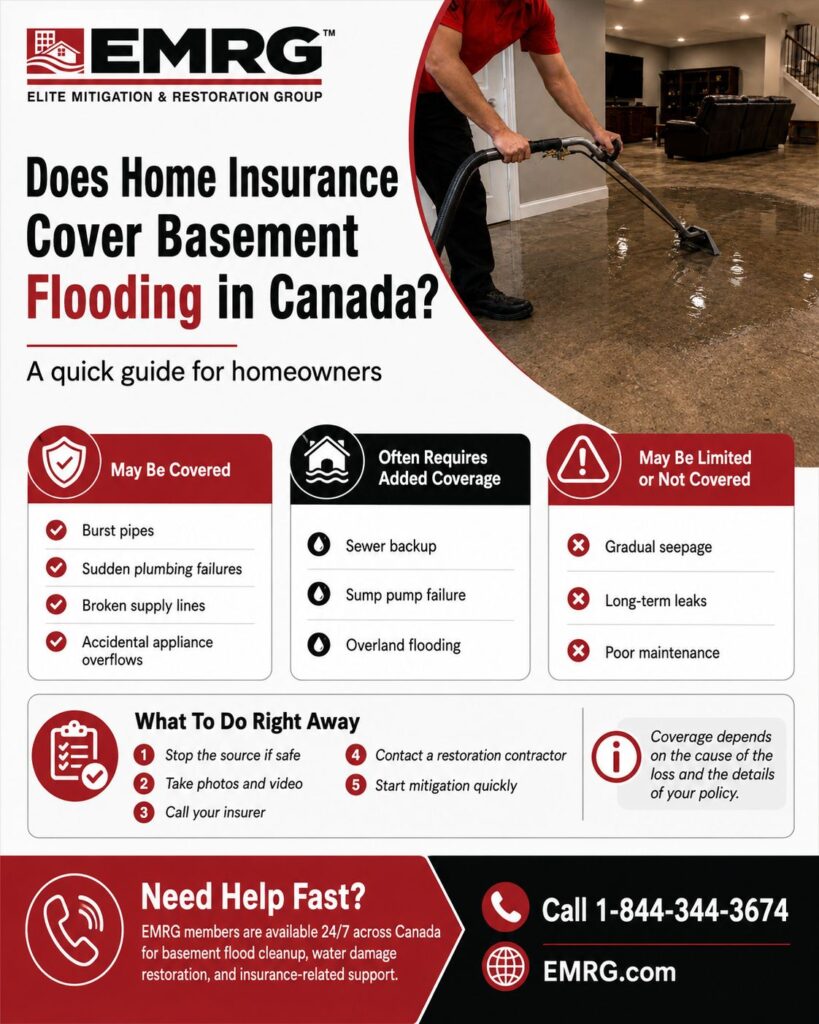
Can You Choose Your Own Restoration Contractor?
Insurance companies may recommend a preferred contractor after a loss. That can be helpful, especially during large weather events when many homes are affected.
However, homeowners should also understand their options before deciding who will work on their property.
When choosing a restoration contractor, ask:
- Do they have experience with insurance restoration?
- Are they trained in water damage mitigation?
- Can they respond quickly?
- Do they provide proper documentation?
- Can they identify hidden moisture?
- Do they offer cleanup, drying, and reconstruction support?
- Are they local, equipped, and reliable?
The right contractor can make a difficult situation easier to manage. They can help stabilize the property, explain the restoration process, and keep the work moving.
Why Professional Water Damage Restoration Matters
Basement flooding is not just about removing visible water.
Moisture can travel under flooring, behind baseboards, into wall cavities, beneath cabinets, and into stored contents. If affected areas are not dried properly, the damage can continue after the basement looks dry.
Professional restoration may include:
- Water extraction
- Moisture mapping
- Thermal imaging
- Removal of wet materials
- Structural drying
- Dehumidification
- Air movement
- Sanitizing affected areas
- Contents assessment
- Mould prevention steps
- Repair and reconstruction
This is especially important when the water is contaminated, the basement is finished, or the flood affects a large area.
EMRG members are experienced restoration professionals who understand emergency response, insurance-related losses, and the importance of timely documentation. Contact us 24/7 at 1-844-344-3674.
How a Restoration Contractor Supports the Insurance Claim Process
A restoration contractor does not decide whether coverage applies. That decision belongs to the insurer.
However, the contractor can play an important role in the claim process by providing clear information about the damage and the work required.
This may include:
- Photos of affected areas
- Moisture readings
- Drying logs
- Equipment records
- Emergency work details
- Scope of damaged materials
- Contents documentation
- Safety concerns
- Cleanup notes
- Repair recommendations
This information can help the homeowner, insurer, and adjuster better understand the loss.
A qualified contractor can also help explain which materials may be restorable and which may need to be removed.
How to Reduce the Risk of Basement Flooding
Not every basement flood can be prevented, but homeowners can reduce their risk.
Consider these steps:
- Clean gutters regularly.
- Extend downspouts away from the foundation.
- Test your sump pump.
- Install a battery backup pump.
- Inspect window wells.
- Seal visible foundation cracks.
- Improve grading around the home.
- Keep floor drains clear.
- Install a backwater valve where appropriate.
- Avoid storing valuables directly on basement floors.
- Review your insurance coverage before storm season.
Homeowners should also ask their insurance provider about sewer backup, overland water, sump pump failure, and water damage coverage.
It is better to understand your coverage before there is water in the basement.
When to Contact EMRG
If your basement has flooded, quick response matters.
EMRG is a national network of vetted restoration contractors serving communities across Canada. EMRG members help homeowners and property owners respond to water damage, sewer backup, storm damage, mould concerns, contents damage, and reconstruction needs.
When you contact EMRG, you are connected with experienced local restoration professionals who understand the urgency of property damage.
EMRG members can help with:
- 24/7 emergency response
- Basement flood cleanup
- Water extraction
- Sewer backup cleanup
- Structural drying
- Moisture inspection
- Contents handling
- Mould remediation
- Insurance restoration support
- Repairs and reconstruction
A flooded basement can feel overwhelming, but you do not have to manage it alone.
Call EMRG toll-free at 1-844-344-3674 for 24/7 emergency restoration support across Canada.
Final Thoughts
So, does home insurance cover basement flooding in Canada?
The answer depends on the cause of the flood and the coverage included in your policy.
Sudden internal water damage may be covered under many policies. Sewer backup, sump pump failure, overland flooding, and groundwater-related damage may require optional coverage or may be subject to exclusions, limits, and deductibles.
If your basement has flooded, document the damage, contact your insurance provider, and call a qualified restoration contractor as soon as possible.
Fast action can help reduce damage, protect your property, and support the insurance claim process.
For emergency basement flood cleanup and restoration support, contact EMRG at 1-844-344-3674. EMRG members are available 24/7 across Canada.
Frequently Asked Questions
Is basement flooding always covered by home insurance in Canada?
No. Basement flooding is not always covered. Coverage depends on the source of the water, the wording of the policy, and whether the homeowner has added coverage for risks such as sewer backup or overland water.
What is the difference between water damage and flood damage?
Water damage often refers to sudden and accidental water from inside the home, such as a burst pipe. Flood damage often refers to water entering from outside, such as surface water from heavy rain, snowmelt, lakes, or rivers. Insurance policies may treat these differently.
Does home insurance cover water coming through basement windows?
It depends on why the water entered. If a storm damaged the window and water entered through the opening, the claim may be reviewed differently than water entering because of poor drainage, a clogged window well, or ongoing maintenance issues.
Does home insurance cover basement flooding from a washing machine?
A sudden washing machine supply line break may be covered under many policies. Damage caused by poor maintenance, a slow leak, or wear and tear may not be handled the same way.
What should I ask my insurance company after a basement flood?
Ask what coverage applies, what your deductible is, whether sewer backup or overland water coverage is included, what documentation is required, and whether emergency mitigation can begin right away.
Can a restoration contractor tell me if my claim is covered?
No. A restoration contractor cannot confirm coverage or approve a claim. Your insurer makes that decision. A contractor can assess the damage, complete emergency work, and provide documentation that may support the claim process.
Should I keep damaged flooring, drywall, or contents for the adjuster?
Take photos and videos before anything is removed. If materials must be removed for safety or emergency mitigation, keep clear records. Your insurer or restoration contractor can advise on documentation before disposal.
How long does it take to dry a flooded basement?
Drying time depends on the amount of water, affected materials, humidity, temperature, and how quickly mitigation begins. A professional restoration contractor can monitor moisture levels and adjust drying equipment as needed.
Can basement flooding cause mould?
Yes. Moisture that is not dried properly can create conditions for mould growth. Fast water extraction, drying, and moisture monitoring can help reduce the risk.
Is sewage backup dangerous?
Yes. Sewage water may contain harmful bacteria, viruses, and other contaminants. Avoid contact with affected water and call a professional restoration contractor for cleanup and sanitation.
Does insurance cover temporary accommodation after a basement flood?
Some policies include additional living expense coverage if the home is not safe or suitable to live in after an insured loss. Coverage depends on the policy and the circumstances of the claim.
Can tenants make an insurance claim for basement flooding?
Tenants may need tenant insurance for personal belongings and additional living expenses. The property owner’s insurance usually applies to the building itself. Tenants should contact their insurance provider and landlord right away.
Does condo insurance cover basement storage locker flooding?
Coverage may depend on whether the damaged items belong to the unit owner, the condo corporation, or another party. Condo owners should review their unit owner policy and contact the condo corporation or property manager.
What if my basement flood is not covered by insurance?
You still need to clean and dry the property quickly to reduce further damage. A restoration contractor can help remove water, dry affected areas, address contamination concerns, and provide repair options.
Does EMRG provide basement flood cleanup near me?
EMRG is a national network of vetted restoration contractors across Canada. Call 1-844-344-3674 for 24/7 emergency support and to connect with an EMRG member in your area.
Related Blogs:
Emergency Restoration Services for Insurance Claims in Canada
Black Water Damage: Causes, Risks, and How to Clean It Properly
Water Leaking Into Basement After Heavy Rain: Causes and Solutions
What to Do After a Flooded Basement: How to Restore Your Home


