
How to Reduce Business Downtime After Commercial Property Damage
Posted June 3, 2026
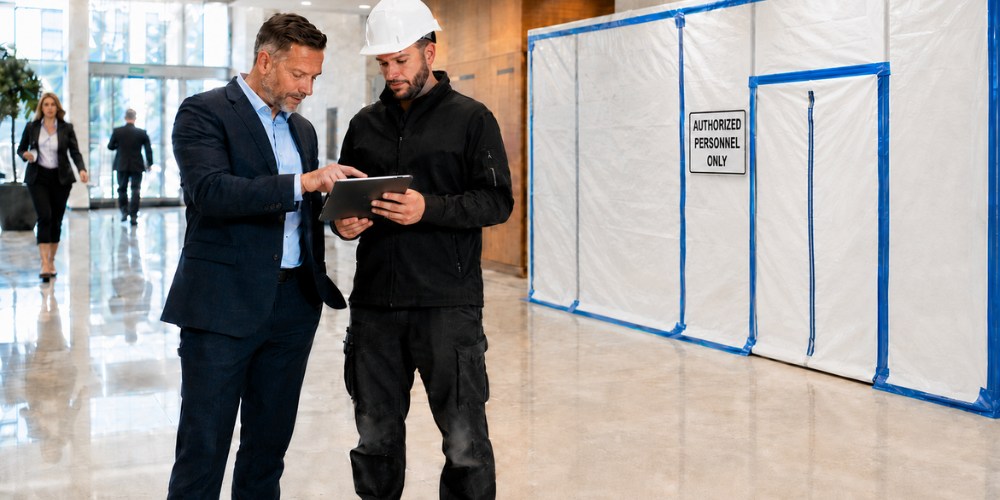
Commercial property damage can happen without warning.
A burst pipe can flood an office overnight. A fire can force a business to close for weeks. A windstorm can damage a roof and expose an entire facility to water intrusion. Even a relatively small incident can create significant operational challenges if it disrupts normal business activities.
While most organizations focus on the cost of repairs, the financial impact of downtime is often far greater. Lost revenue, reduced productivity, tenant disruption, customer inconvenience, and operational delays can quickly add up.
For property managers, facility managers, business owners, insurers, and commercial property owners, reducing business downtime should be a key part of any emergency response strategy.
This guide explains how to minimize disruption, protect operations, and accelerate recovery after commercial property damage.
What Is Business Downtime?
Business downtime refers to any period when normal operations are interrupted due to property damage, unsafe conditions, equipment failure, or restricted access to a facility.
Depending on the severity of the incident, downtime may involve:
- Full business closure
- Reduced operating hours
- Partial occupancy restrictions
- Production delays
- Supply chain disruptions
- Employee displacement
- Customer access limitations
Even a short interruption can have significant consequences for businesses that rely on daily operations, customer traffic, manufacturing schedules, inventory movement, or tenant occupancy.
The goal after any property loss is not simply to repair the damage. The goal is to restore operations as quickly and safely as possible.
The True Cost of Business Interruption
Many organizations underestimate the impact of business interruption.
Repair costs are often visible and measurable. Downtime costs can be much harder to track.
Potential consequences include:
Lost Revenue
When a facility cannot operate normally, sales and income opportunities may be lost.
Reduced Productivity
Employees may be unable to perform their normal duties due to damaged workspaces, equipment issues, or safety concerns.
Tenant Disruption
For commercial property managers, tenant dissatisfaction can become a significant issue when businesses experience prolonged disruptions.
Customer Impact
Extended closures can affect customer confidence and potentially drive business elsewhere.
Additional Expenses
Temporary accommodations, equipment rentals, security measures, and emergency repairs often create unexpected costs.
For many organizations, every day of downtime matters.
Common Causes of Commercial Property Damage
Commercial properties face numerous risks throughout the year.
Water Damage
Water damage remains one of the most common causes of commercial property losses.
Common sources include:
- Burst pipes
- Plumbing failures
- Roof leaks
- Appliance malfunctions
- Sprinkler system failures
- Foundation leaks
- Heavy rainfall
Water can travel quickly through a building and affect flooring, drywall, insulation, electrical systems, equipment, inventory, and furnishings.
Professional mitigation should begin immediately to limit secondary damage.
Fire and Smoke Damage
Fire losses can be devastating for businesses.
Even when flames are contained quickly, smoke and soot can spread throughout a facility and affect:
- Electronics
- Inventory
- HVAC systems
- Documents
- Furnishings
- Interior finishes
Many businesses underestimate the extent of smoke contamination and the specialized cleaning required to restore affected areas.
Storm Damage
Canadian businesses regularly face severe weather events including:
- Windstorms
- Hailstorms
- Heavy rainfall
- Snow and ice events
- Flooding
- Wildfire smoke impacts
Storm damage can affect roofs, windows, building envelopes, mechanical systems, and property access.
Sewer Backups
Sewer backups often involve contaminated water and require specialized cleaning and disinfection procedures.
These incidents can create health and safety concerns while significantly disrupting operations.
Vehicle Impacts
Commercial buildings occasionally experience damage caused by vehicle collisions.
Structural stabilization, safety assessments, and emergency repairs are often required before operations can resume.
Vandalism and Break-Ins
Vandalism, theft, and break-ins can damage property, disrupt operations, and create security concerns that require immediate attention.
Why the First 24 Hours Matter
The initial response following a property loss often determines how quickly a business can recover.
Property damage rarely remains contained.
Water continues to spread.
Moisture migrates into hidden areas.
Smoke residues become more difficult to remove.
Structural conditions may deteriorate.
Acting quickly can significantly reduce both damage and downtime.
During the first 24 hours, priorities should include:
- Protecting occupants
- Securing the property
- Preventing additional damage
- Documenting conditions
- Initiating mitigation efforts
- Communicating with stakeholders
This is where experienced restoration professionals provide tremendous value.
Many EMRG members offer 24/7 emergency response services designed to help stabilize losses and begin recovery as quickly as possible.
7 Ways to Reduce Business Downtime After Commercial Property Damage
- Develop an Emergency Response Plan
Every commercial property should have a documented emergency response plan.
The plan should identify:
- Key contacts
- Emergency procedures
- Vendor information
- Communication protocols
- Occupant responsibilities
Planning ahead helps eliminate confusion during stressful situations.
- Maintain Updated Emergency Contact Lists
Critical contacts should be accessible at all times.
This includes:
- Property managers
- Building owners
- Insurers
- Contractors
- Restoration professionals
- Utility providers
Quick access to the right people can significantly improve response times.
- Document Critical Assets
Businesses should maintain records of:
- Equipment
- Inventory
- Building systems
- Floor plans
- Mechanical assets
Accurate documentation can simplify restoration planning and support insurance claims.
- Protect Important Records and Data
Physical records and digital information are often essential to ongoing operations.
Businesses should regularly review backup procedures and document protection strategies.
- Establish Trusted Partnerships Before an Emergency
One of the most effective ways to reduce downtime is to identify qualified restoration professionals before a loss occurs.
Waiting until an emergency happens can delay response efforts and create unnecessary complications.
EMRG’s network of independent restoration companies provides access to trusted local professionals across Canada who understand regional conditions and can respond when needed.
- Communicate Quickly
Clear communication helps manage expectations and reduce uncertainty.
Businesses should establish procedures for communicating with:
- Employees
- Customers
- Tenants
- Suppliers
- Stakeholders
Accurate information helps maintain confidence throughout the recovery process.
- Prioritize Business Continuity Planning
Business continuity planning focuses on maintaining critical operations during and after a disruption.
Organizations that invest in continuity planning are often better positioned to recover quickly and minimize losses.
How Property Managers Can Minimize Disruption
Property managers often serve as the central point of coordination during commercial losses.
Their responsibilities may include:
- Communicating with tenants
- Coordinating emergency services
- Managing contractors
- Working with insurers
- Overseeing recovery efforts
Effective property management can significantly reduce confusion and help accelerate restoration timelines.
Successful property managers often establish relationships with qualified restoration providers before emergencies occur.
This proactive approach can help ensure a faster and more organized response.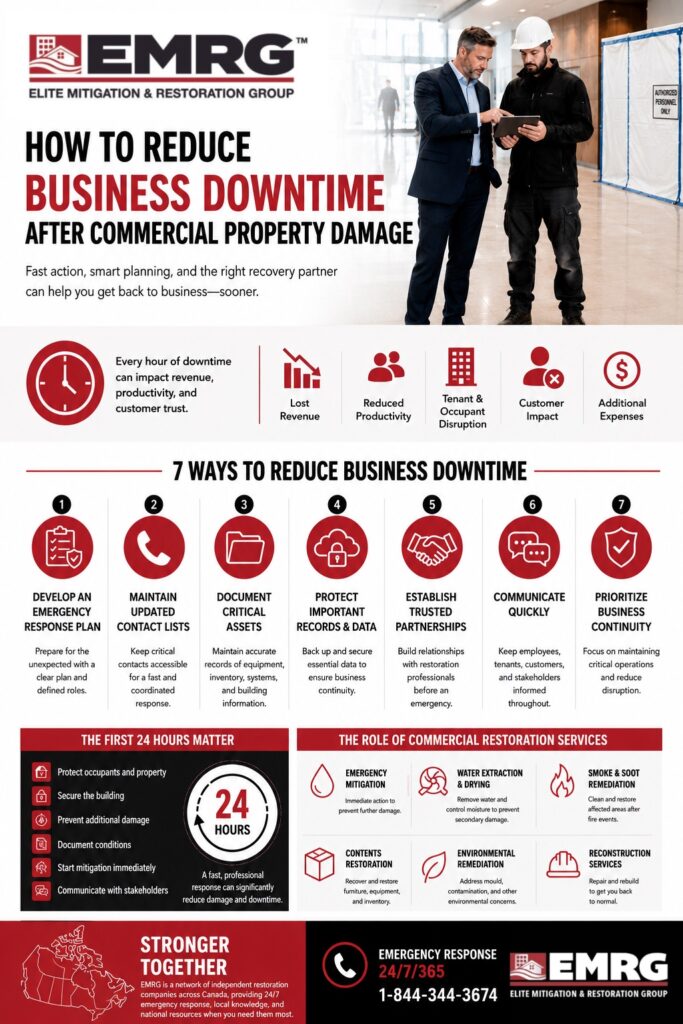
The Role of Commercial Restoration Services
Professional restoration services play an important role in reducing downtime.
Key services may include:
Emergency Mitigation
Immediate action to prevent additional damage.
Water Extraction and Drying
Removing water and controlling moisture levels to prevent secondary damage.
Smoke and Soot Remediation
Cleaning and restoring affected surfaces following fire events.
Contents Restoration
Recovering furniture, equipment, inventory, and important business assets.
Environmental Remediation
Addressing mould, contamination, and other environmental concerns.
Reconstruction Services
Completing repairs and rebuilding damaged areas.
The faster these services begin, the sooner businesses can move toward normal operations.
What to Look for in a Commercial Restoration Partner
Not all restoration providers have the same capabilities.
When evaluating potential partners, consider:
24/7 Emergency Response
Property damage does not wait for business hours.
Commercial Experience
Commercial losses often involve complex building systems and multiple stakeholders.
Scalable Resources
Large losses may require significant manpower, equipment, and logistical support.
Strong Communication
Clear communication is essential throughout the recovery process.
Industry Certifications
Professional certifications demonstrate training and commitment to industry standards.
Regional Support
Organizations with access to additional resources can often respond more effectively during large-scale events.
Why Businesses Across Canada Turn to EMRG
When commercial property damage occurs, choosing the right restoration partner can make a significant difference in both recovery timelines and business continuity.
EMRG is a national network of vetted independent restoration companies located in communities across Canada.
Unlike franchise systems, EMRG members remain locally owned and operated while benefiting from the strength and support of a nationwide network.
This means businesses gain access to:
- Local expertise
- Rapid emergency response
- Consistent professional standards
- Additional resources during large losses
- Catastrophe support capabilities
- National coordination when required
For property managers overseeing multiple locations, insurers managing claims across Canada, and businesses seeking dependable support, EMRG offers a valuable combination of local knowledge and national reach.
Emergency response is available 24 hours a day, 7 days a week. Contact EMRG at 1-844-344-3674.
Frequently Asked Questions: Commercial Property Damage
Can businesses remain open during restoration work?
In many cases, yes. Depending on the extent of the damage, restoration work can sometimes be phased to allow portions of a facility to remain operational. Safety requirements and building conditions ultimately determine what is possible.
How do restoration companies determine drying goals after water damage?
Professional restoration teams use moisture mapping, specialized meters, and industry standards to establish target moisture levels based on building materials and environmental conditions.
What industries are most vulnerable to business interruption?
Healthcare facilities, hospitality properties, manufacturing operations, retail businesses, logistics centres, educational institutions, and multi-tenant commercial properties are often particularly vulnerable due to their reliance on continuous operations.
How often should commercial emergency plans be reviewed?
Emergency response plans should be reviewed at least annually and whenever significant operational, staffing, or building changes occur.
Can smoke damage affect buildings that were not directly burned?
Yes. Smoke particles can travel considerable distances and impact buildings far from the source of a fire. HVAC systems, furnishings, electronics, and indoor air quality can all be affected.
What should businesses do if a loss occurs outside normal business hours?
Businesses should immediately contact emergency services if necessary, secure the property if safe to do so, notify key stakeholders, and contact a qualified restoration professional that offers 24/7 emergency response.
Are restoration services only used after major disasters?
No. Restoration professionals respond to losses of all sizes, from minor water leaks and localized smoke damage to large commercial catastrophes.
What role does documentation play during recovery?
Accurate documentation supports decision-making, assists with insurance claims, helps track progress, and creates a record of conditions throughout the restoration process.
Final Thoughts
Commercial property damage can create significant challenges for businesses, property managers, insurers, and building owners.
While the damage itself is important, the true impact is often measured by the amount of downtime that follows.
Organizations that plan ahead, establish trusted partnerships, communicate effectively, and act quickly after a loss are often able to recover faster and reduce disruption.
Across Canada, EMRG members help businesses respond to property damage with professional restoration services, rapid emergency response, and local expertise backed by the strength of a national network.
If your organization needs immediate assistance, call EMRG at 1-844-344-3674. Emergency support is available 24/7.
Related Blogs:
Emergency Restoration Services for Insurance Claims in Canada
Emergency Planning for Commercial and Multi-Unit Residential Buildings
Large-Scale Commercial Restoration: A Strategic Guide for Contractors